How Channapatna toys are made
Ivory wood, a lathe and a stick of lac: a morning at a workshop an hour from Mysuru.
Free delivery in Mysuru above ₹999 · Ships across India in 3–5 days
12 Kalidasa Road, VV Mohalla, Mysuru 570002
Tue–Sun · 10.30 am – 8 pm · Mon closed
Why children often play longer with six toys than with sixty, and a simple way to rotate toys at home every two weeks.
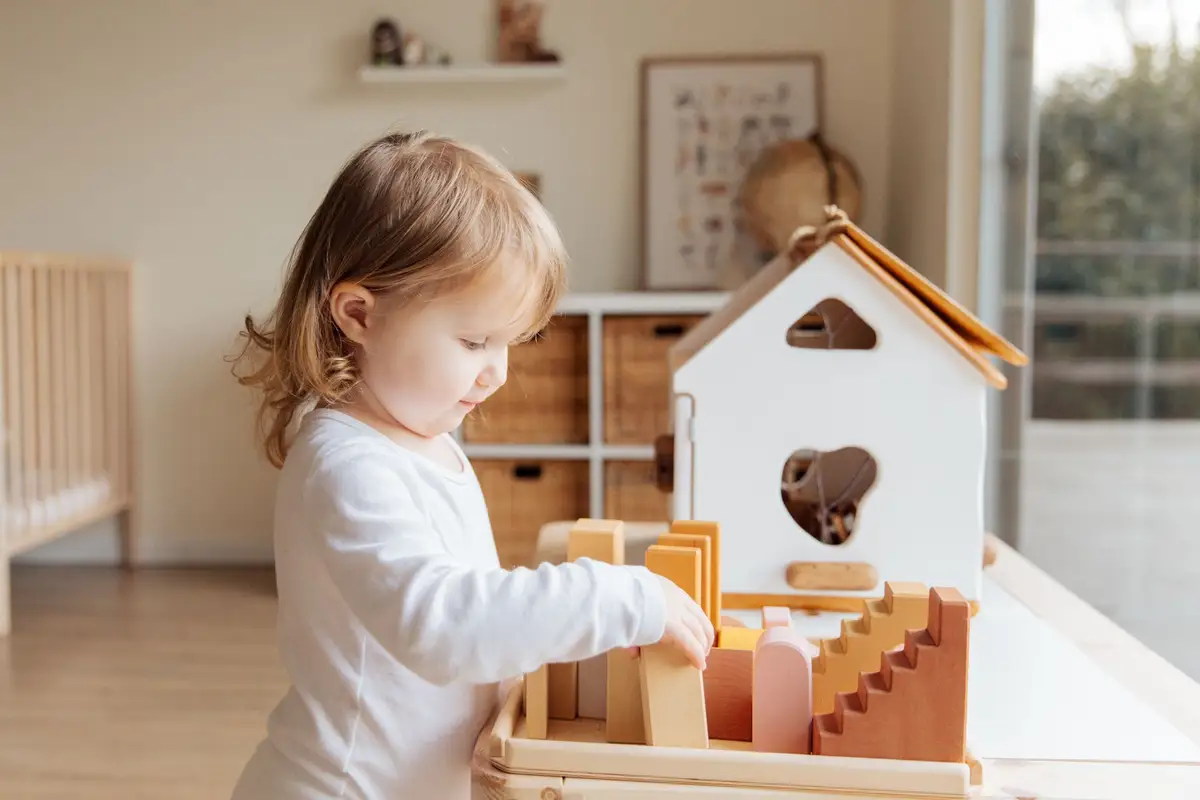
Many parents tell us their child has a room full of toys but still says there is nothing to play with. It is a common problem, and a simple habit called toy rotation often helps. It costs nothing, and it makes the toys you already own feel new again.
The idea is to keep only a few toys out at a time, usually six to ten, and store the rest out of sight. Every two weeks or so, swap some of them. Children faced with a smaller choice tend to play with each toy for longer and in more ways, and a toy that returns after a month away is greeted like a new one.
Start by gathering every toy in the house and sorting them into types: building and stacking, pretend play, moving things like trains and cars, puzzles and books, and outdoor toys. Then divide them into three or four groups, each with something from every type. Put one group out on a low, open shelf where the child can reach everything, and pack the rest in labelled boxes or cloth bags in a cupboard.
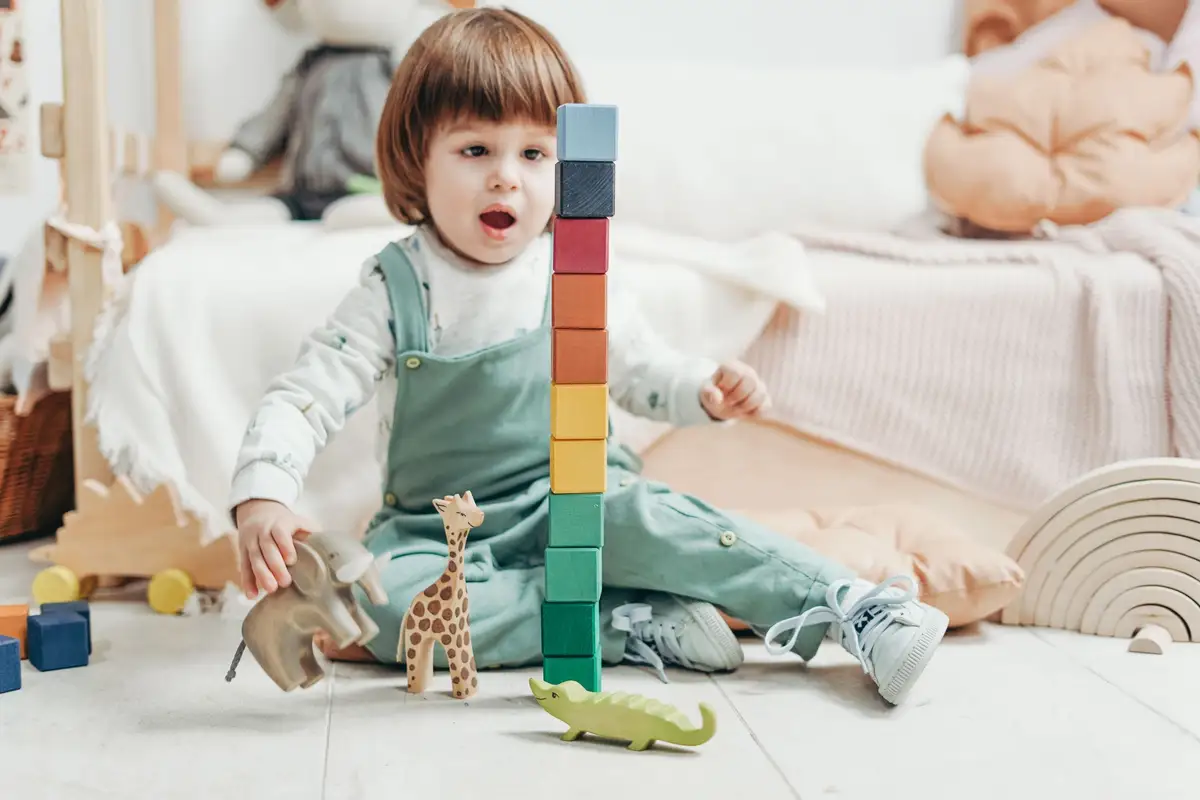
Watch what your child plays with. If a toy is ignored for two rotations, it may be too easy or too hard for now; put it away for a few months. If one is loved, like the rainbow stacker often is, keep it out across rotations. Rotation also helps with gifts. When relatives ask what to buy, you can see clearly which kind of play is missing, and choose one good toy rather than several.
Keep reading
Ivory wood, a lathe and a stick of lac: a morning at a workshop an hour from Mysuru.
From the first rattle to the first tricycle, what children actually play with at each stage.
A damp cloth, a little oil and no long soaks: how to keep wooden toys good for the next child.