Temple jewellery, explained
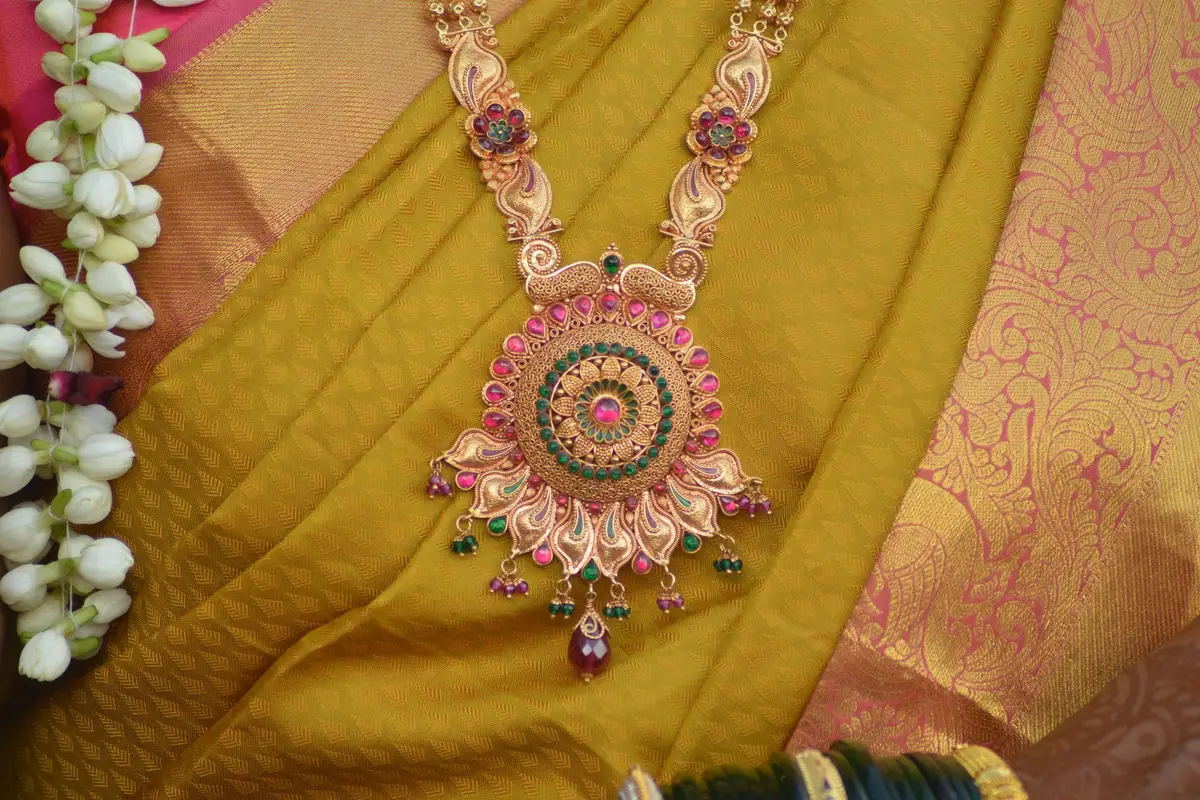
Where the style comes from, and how a Lakshmi haram is made by hand.
22K gold, weighed in front of you · Lifetime exchange at today’s gold rate
52 Big Bazaar Street, Town Hall, Coimbatore 641001
Mon–Sat · 10 am – 8.30 pm · Sun by appointment
Gross weight, net weight, rate and making charge: what each line tells you.

A gold bill can look like a wall of numbers, but it has only a handful of lines, and each one answers a simple question. Once you know them, you can compare two jewellers fairly.
The first line is gross weight, the weight of the whole piece on the scale, stones and all. Next comes stone weight, which is taken off, because you pay for stones separately. What is left is the net gold weight, and that is the number your price is built on.
The third line is the rate per gram that day. Gold is priced at that morning’s 22K rate, and the rate should be written on the bill, not left for you to guess. Multiply it by the net weight and you have the value of the gold itself.
Then comes the making charge, shown as a percentage. It pays for the karigar’s hours: from 8% on a plain chain to 18% on kundan or antique work. Last is GST, shown as its own line.
Weight and price are on the bill, so check them there. Ours lists every line separately. If any jeweller gives you a single total, it is reasonable to ask them to break it down.
Keep reading
Where the style comes from, and how a Lakshmi haram is made by hand.
How families split a budget across pieces, and where old gold fits in.
Soap, a soft brush and separate pouches: the routine that keeps 22K gold bright between workshop visits.