Adding a mezzanine floor inside an existing shed
Extra storage or office space without a new building: what to check first, how it is built and what it costs.
Taking enquiries for sheds and warehouses across Andhra Pradesh and Odisha
Plot 27, Autonagar, Gajuwaka, Visakhapatnam 530012
Mon–Sat · 8.30 am – 6 pm
Why a well-designed light frame can outperform a heavy one, and what really makes a steel structure safe.
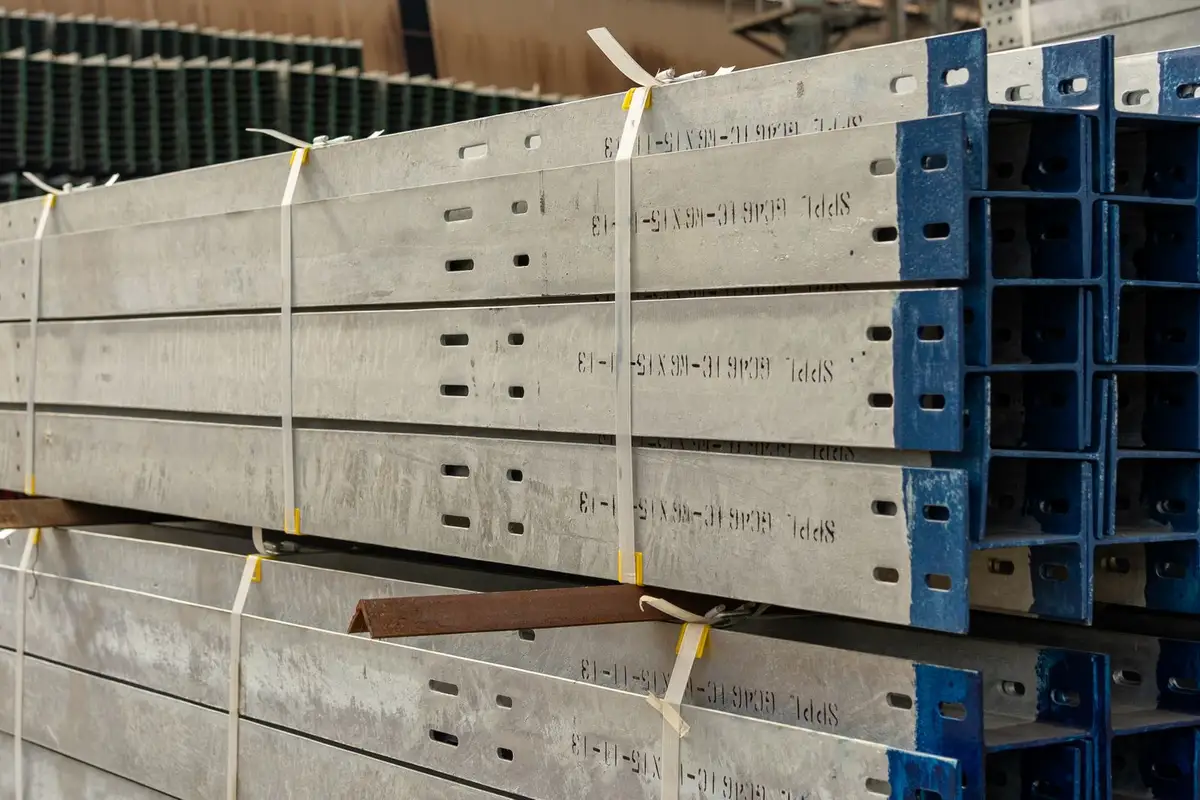
One belief we hear often, from first-time clients and some contractors, is that more steel means a stronger, safer shed. A competing quote with lower tonnage is treated as a cut corner. Sometimes it is. Often it is simply better design.
In a pre-engineered frame, steel is placed where the loads are. Rafters are deep near the columns, where bending is greatest, and shallow in the middle of the span. The same rafter made from a uniform rolled section would carry extra steel along most of its length, where it does nothing useful. That extra weight also has to be held up by the columns and foundations, so it adds cost below as well as above.
What makes a structure safe is not weight but a correct design for the real loads: wind, roof live load, cranes, solar panels and earthquakes, with connections, bracing and anchor bolts that carry those loads all the way to the ground. Many failures we have seen in older sheds had plenty of steel but weak connections, missing bracing or poorly fixed roof sheets. Fabrication quality matters as much, especially full welds, correct bolt grades and proper painting.
When comparing quotes, ask each supplier for the design basis: the wind speed, the loads and the code used. Ask for the steel grade and tonnage, the bolt grade and the paint system. If one quote is much lighter, ask why. A good engineer will explain it plainly. If the answers are vague, that is the real warning sign.
Keep reading
Extra storage or office space without a new building: what to check first, how it is built and what it costs.
Tapered frames save steel; rolled sections are easier to change later.
Why surface preparation matters more than the paint you choose.