Designing a shed for cyclone season on the Andhra coast
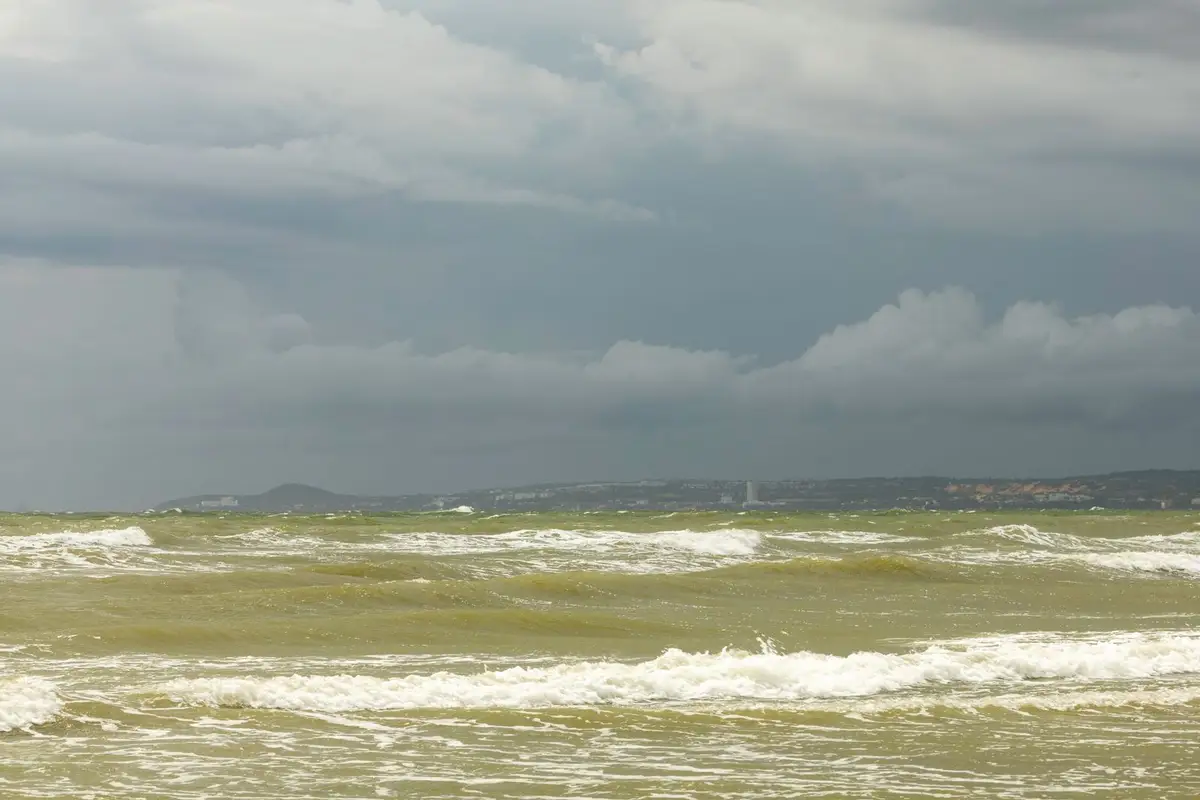
Wind speed, roof pitch, bracing and anchor bolts: what keeps steel buildings on the Visakhapatnam coast standing through October storms.
Taking enquiries for sheds and warehouses across Andhra Pradesh and Odisha
Plot 27, Autonagar, Gajuwaka, Visakhapatnam 530012
Mon–Sat · 8.30 am – 6 pm
Cutting, fitting, welding, blasting and painting: how a built-up rafter is made in our yard before it goes to site.
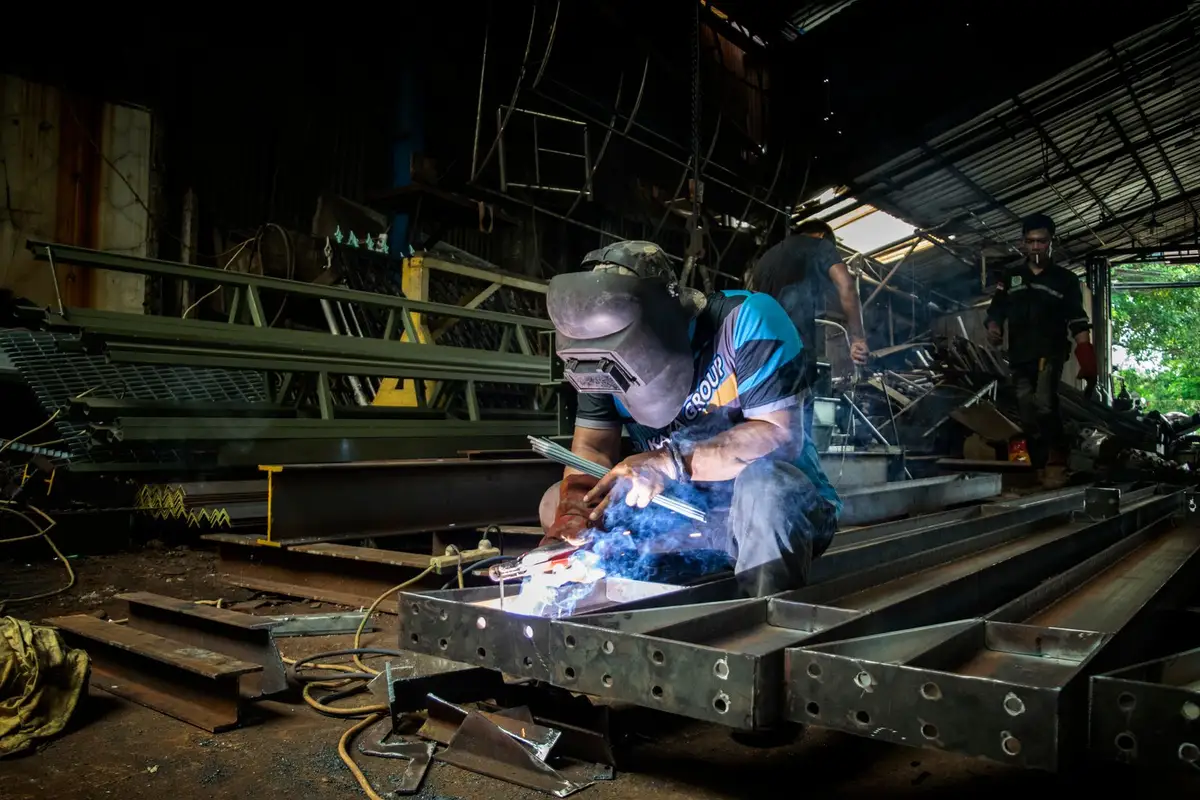
Most of a pre-engineered building is made in our Autonagar yard, and a rafter for a 30 m span passes through five bays over about three days. Here is its journey.
It starts at the CNC plasma table. Steel plates of E350 grade, delivered with mill invoices, are cut into flanges and tapered webs to the shop drawing. The machine nests parts to waste as little plate as possible, and every piece is stamped with a part number so it can be traced back to its plate.
In the fit-up bay, fitters tack the web between the two flanges on a jig, check the depth at each end with a tape and square, and correct any twist. The section then goes to the submerged arc welding gantry, which lays a continuous weld along each side of the web in one pass. End plates and stiffeners are welded by hand. A quality inspector checks dimensions and welds against the drawing and marks the rafter as cleared on its tag.
Next comes the blasting chamber, where steel grit strips mill scale and rust to a clean grey surface. Within four hours, before any new rust can form, the rafter is sprayed with zinc-rich primer, then two coats of epoxy and polyurethane paint, with dry-film thickness checked with a gauge. Finally, each piece is marked with its grid position, stacked on timber, and loaded in the order the erection crew will need it on site.
Keep reading
Wind speed, roof pitch, bracing and anchor bolts: what keeps steel buildings on the Visakhapatnam coast standing through October storms.
Site details, sizes, loads and use: the information that turns a rough estimate into a firm quotation, and how long each step takes.
Sheet thickness and coating, natural light and hot air: how to choose a roof that suits the building and the coast.