Heavier steel is not always stronger
Why a well-designed light frame can outperform a heavy one, and what really makes a steel structure safe.
Taking enquiries for sheds and warehouses across Andhra Pradesh and Odisha
Plot 27, Autonagar, Gajuwaka, Visakhapatnam 530012
Mon–Sat · 8.30 am – 6 pm
Sheet thickness and coating, natural light and hot air: how to choose a roof that suits the building and the coast.
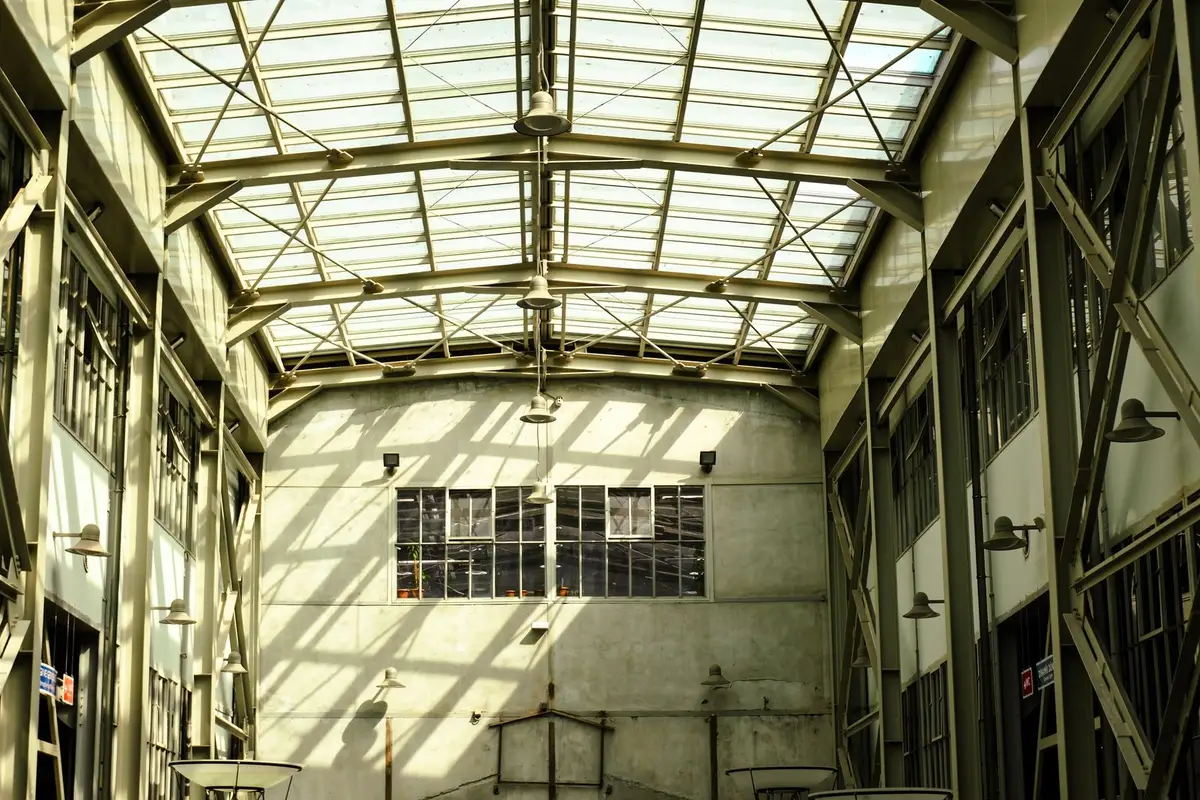
The roof is the largest surface on any shed, and it decides how hot, bright and long-lasting the building will be. These are the choices we discuss with every client.
Sheets first. Most of our roofs use colour-coated steel sheet on a zinc-aluminium base. Thickness is usually 0.45 to 0.6 mm. Thinner sheet is cheaper but dents more easily when people walk on it, and it lasts less well near the sea. Within 5 km of the coast, we recommend at least 0.5 mm with a heavier metallic coating and a coastal-grade paint. Standing-seam roofs, where sheets lock together without screws through the surface, leak less on large, low-pitched roofs, at a higher price.
Natural light saves electricity through the day. Translucent polycarbonate sheets in place of 5 to 8% of the roof area light most warehouses well without making them hot. More than about 10% can cause glare and heat. We place them in rows, offset from each other, so light falls evenly on the floor.
Ventilation keeps hot air from collecting under the roof. A continuous ridge ventilator lets warm air out along the top, and wind-driven turbine ventilators help in tall sheds. For buildings where people work all day, insulation under the sheet, such as a glass-wool blanket with a foil facing, lowers the heat felt inside on summer afternoons. For storage, it is often not needed. We price each option separately in the quote, so you can choose what suits your use.
Keep reading
Why a well-designed light frame can outperform a heavy one, and what really makes a steel structure safe.
Extra storage or office space without a new building: what to check first, how it is built and what it costs.
Tapered frames save steel; rolled sections are easier to change later.