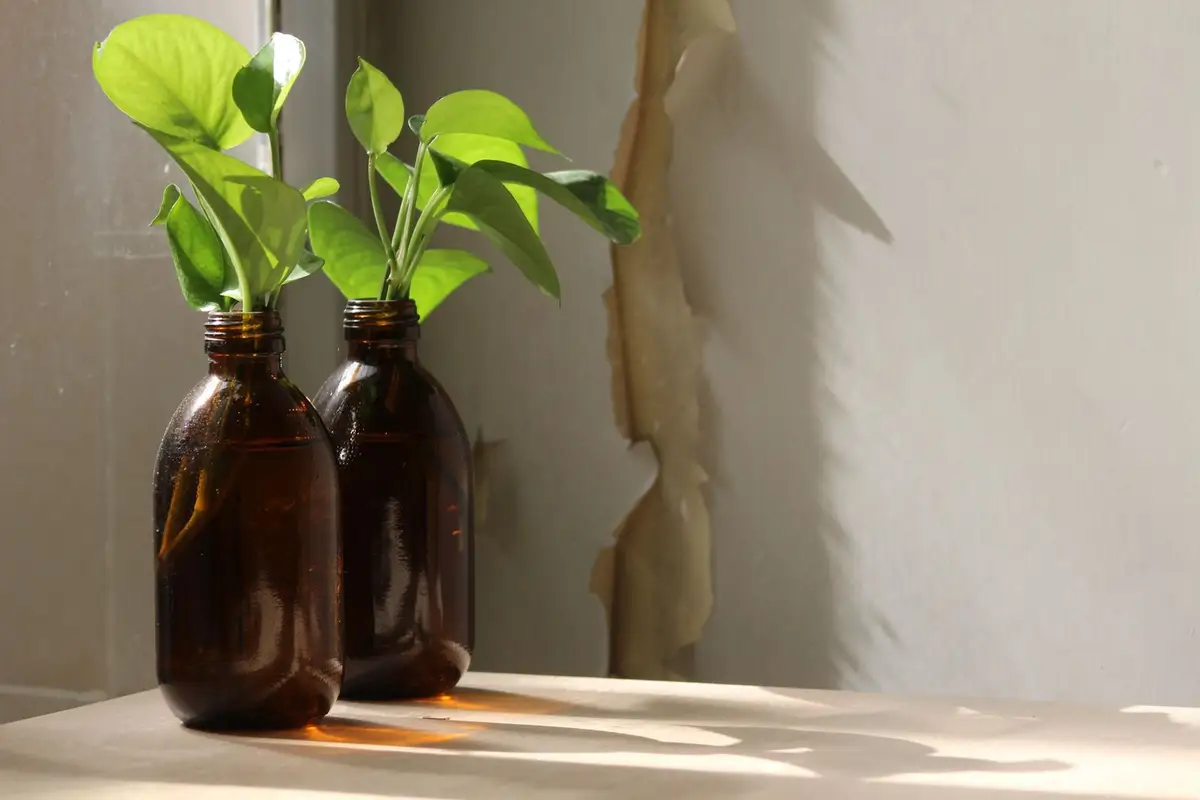
From cutting to counter: how a pothos is grown
Twelve weeks in our Kanakapura Road shade houses, from a single node in water to a plant ready for your shelf.
Plants delivered potted and watered across Bengaluru · Free delivery above ₹1,499
22 Sarjapur Road, Kaikondrahalli, Bengaluru 560035
Every day · 8 am – 7 pm
Each pot material holds water differently. How to match the pot to the plant, the room and how often you water.
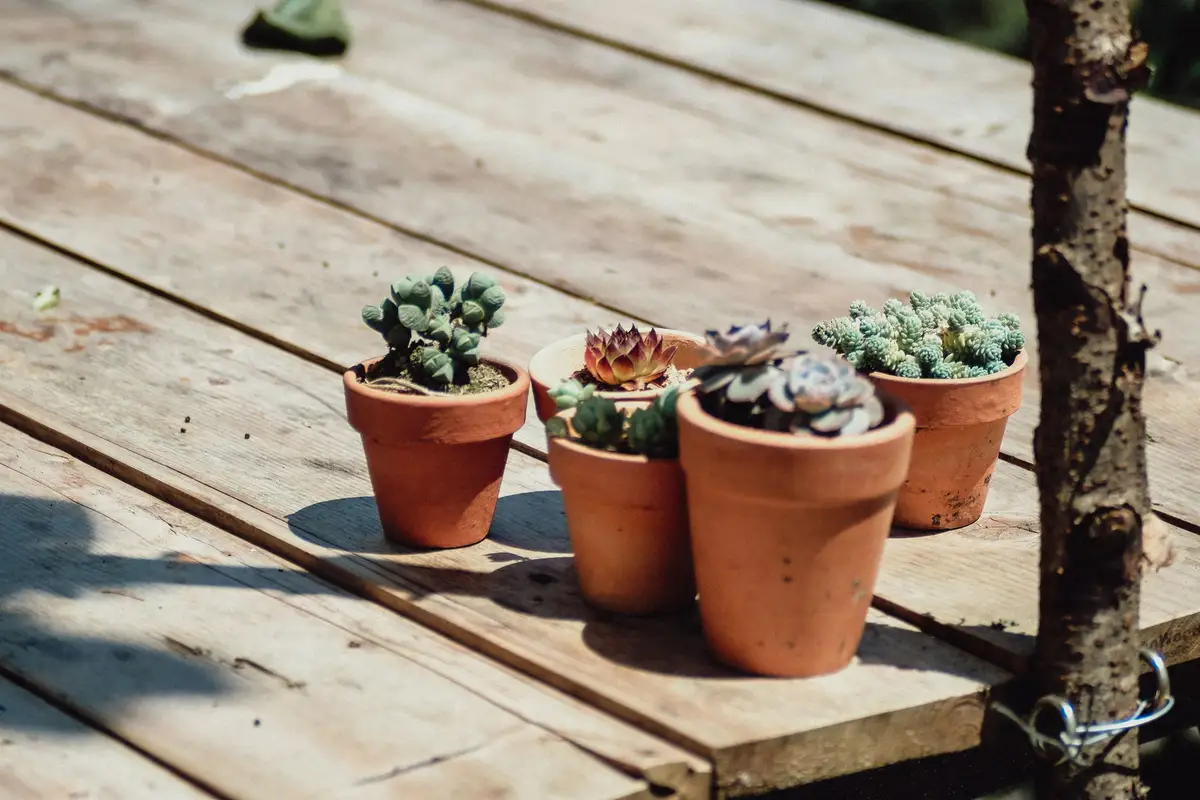
People usually choose a pot by colour and size. The material matters just as much, because it decides how fast the soil dries, and most indoor plants that fail in Bengaluru flats fail from too much water, not too little.
Terracotta is porous. Water seeps through the walls and evaporates, so the soil dries faster and roots get more air. That makes it ideal for succulents, cacti, snake plants and anyone who tends to overwater. The downside is that plants in terracotta need water more often in the dry months, from February to May, and the pots can leave a damp ring on floors; stand them on a saucer with small feet. Glazed ceramic does not breathe. Soil stays moist longer, which suits ferns, peace lilies, calatheas and monsteras that like steady moisture. It is heavier and more stable for tall plants like a fiddle-leaf fig. Always choose ceramic with a drainage hole, or use it as an outer pot with a plastic nursery pot inside that you can lift out to water.
Plastic is light, cheap and holds moisture like ceramic. It is practical for hanging baskets and high shelves, and for large plants you need to move. It fades and turns brittle in direct sun on a balcony within two or three years.
Whatever you choose, the drainage hole matters most. Go only one size up when repotting, about 5 cm wider than the root ball. Our terracotta set of five, 4 to 10 inches, costs ₹1,150, and every plant we deliver comes in a pot with a hole.
Keep reading
Twelve weeks in our Kanakapura Road shade houses, from a single node in water to a plant ready for your shelf.
The botanical garden, the January and August shows, and the nurseries around the city worth a weekend visit.
A common reason people buy plants, and a common myth. What plants do and do not do for the air in your flat.