What happens at an ayurvedic consultation
Questions about your day, a pulse check and plain advice. No rush.
Consultations by appointment · Therapies booked only after a consultation
TC 15/1180, Vazhuthacaud, Thiruvananthapuram 695014
Mon–Sat · 7.30 am – 6 pm · Sun by appointment
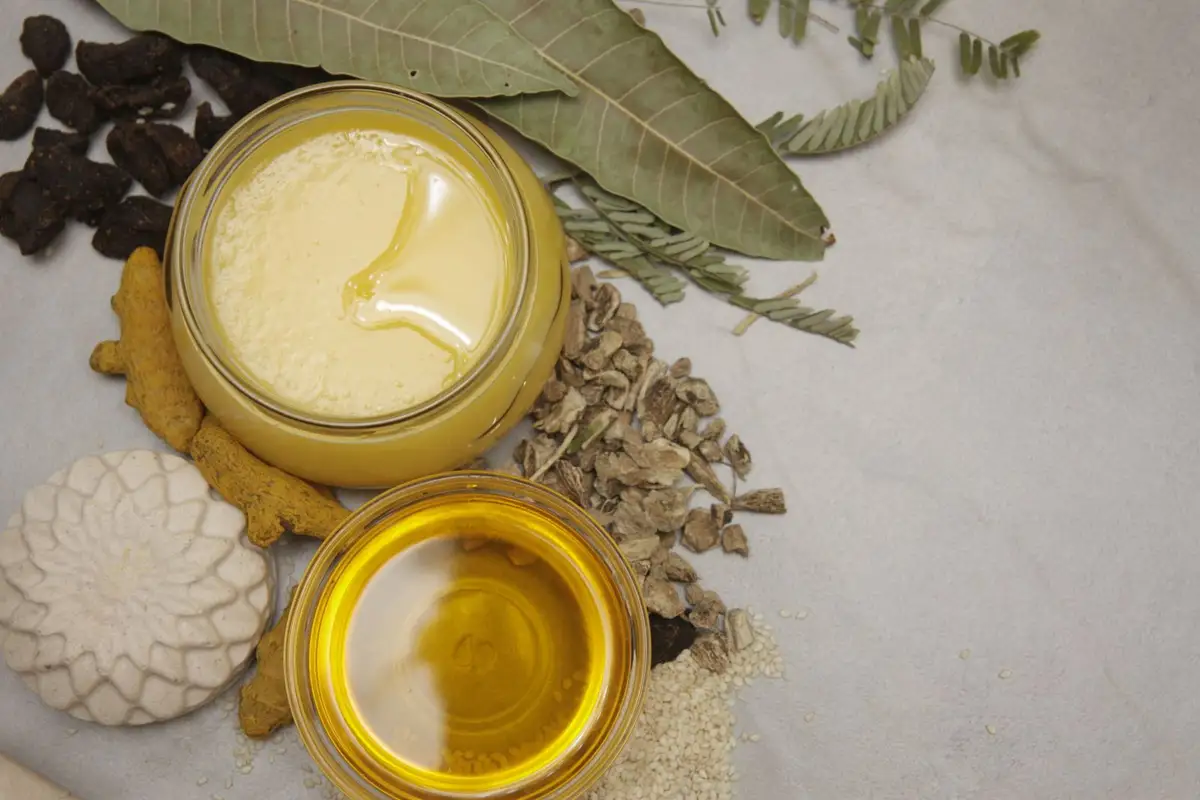
Tulsi, adalodakam, kurunthotti and twenty more: the plants we grow and how they reach the pharmacy.
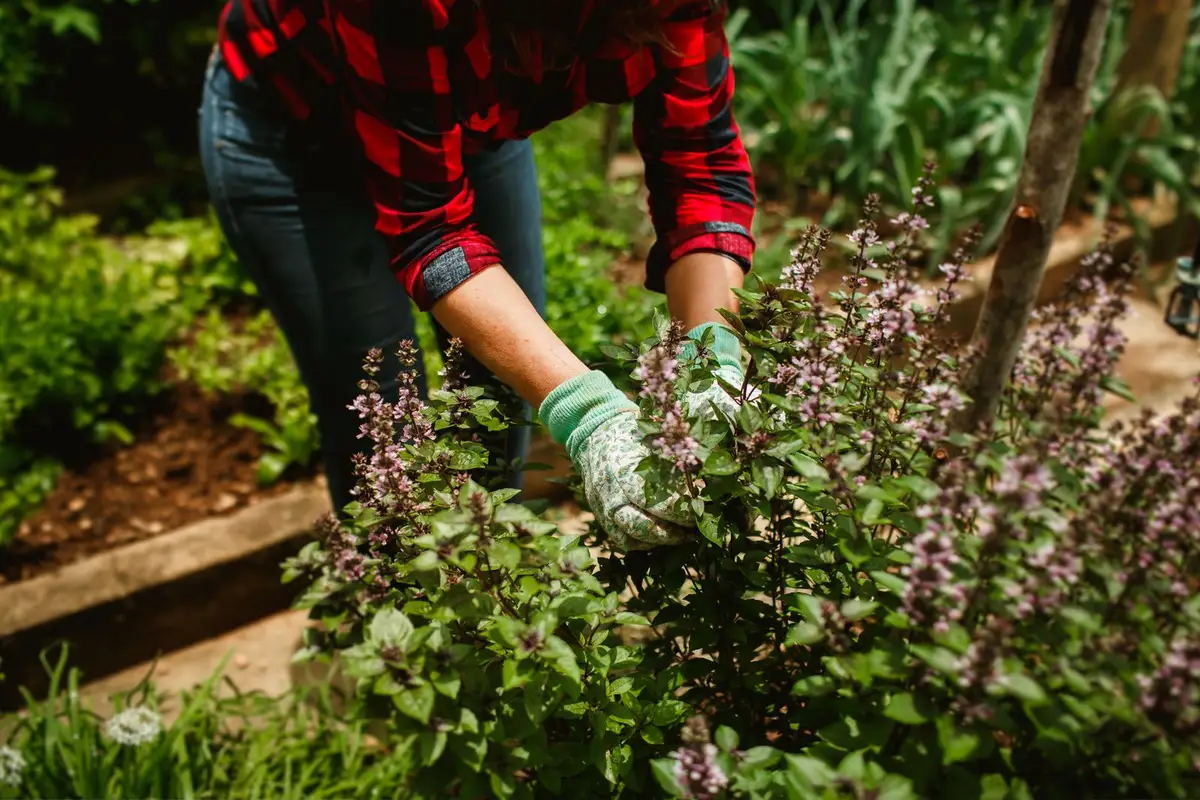
Behind the old house at Thanal, between the kitchen and the pharmacy, is a garden of about ten cents that Dr Lakshmi’s grandmother planted in the 1970s. Today it holds about twenty-five medicinal plants, and it supplies a part of the fresh leaves and roots we use every week.
Some plants are familiar to any Kerala household. There are several kinds of tulsi, curry leaf, turmeric and ginger beds, and a row of aloe along the wall. Others are less known outside ayurveda: adalodakam, a shrub with long pale leaves; kurunthotti, whose roots are used in oils; thazhuthama, a low creeper; and a young neem tree that gives shade to the bench where guests wait. Castor, drumstick and tamarind trees near the back wall provide leaves for elakizhi.
The garden is tended by Gopalan, who has worked with us since the clinic opened. He waters it by hand in the dry months, mulches it with coconut husk before the monsoon and harvests in the early morning, when the leaves are fresh. Leaves for elakizhi are picked on the day of the therapy. Roots for oils are dug in their season, washed, dried in the shade and taken to the pharmacy, where they are cooked in copper urulis with oil and other herbs.
Our garden cannot supply everything; most herbs for the pharmacy come from trusted growers in Thiruvananthapuram and Kollam districts. But walking through it is the best way to see where your oil begins. Ask the receptionist, and Gopalan will show you around after your therapy.
Keep reading
Questions about your day, a pulse check and plain advice. No rush.
Copper urulis, slow fires and three days for a single batch.
The rainy months are the traditional season for therapies. Here is why, and how to plan.