
Bhoot Chaturdashi to Bhai Phonta: the week in Kolkata
Fourteen lamps, Kali Pujo night and the sibling day after: what each day of the week asks for, and what to order.
Kali Pujo and Diwali orders open · Free delivery in Kolkata above ₹3,000
18 Canning Street, Burrabazar, Kolkata 700001
Mon–Sat · 10 am – 8 pm · Daily till 10 pm in Oct
Clay pots, a family of potters and a filling season that starts in August: how the tubri on our counter are made.
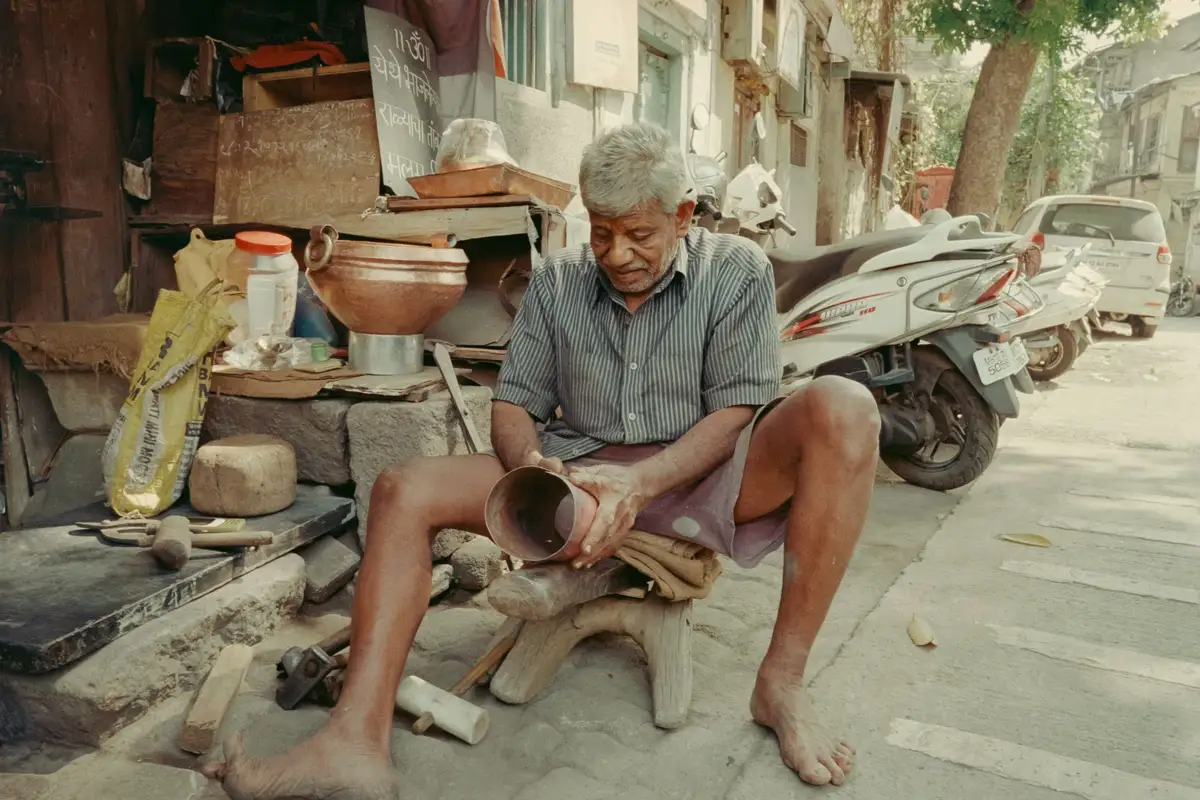
Tubri are the oldest thing we sell. Our grandfather sold them from a wooden counter in 1968, and we still buy most of ours from the same kind of place: potter families in villages south of the city, who shape the pots in summer and fill them later.
The pots come first. Between April and June, before the rains, the potters throw small round pots on the wheel, about the size of a fist, with a narrow mouth. They are dried in the sun for a week and fired in a shared kiln. A family makes several thousand in a season, and a few always crack in firing.
Filling starts in August, in separate sheds well away from homes. A green formulation of iron filings, charcoal and other powders is packed into each pot by hand and tamped with a wooden rod, which decides how high and how long the tubri will flower. The mouth is sealed with clay and paper, a fuse is set, and the pots dry again for several weeks.
We visit in September, test a few from every lot in an open field, and buy only lots that flower evenly for around 45 seconds. That is why a clay tubri costs ₹52 and a factory paper one less: each is made by hand, one at a time, and every lot is tested before it reaches Canning Street.
Keep reading
Fourteen lamps, Kali Pujo night and the sibling day after: what each day of the week asks for, and what to order.
From the first list you send to the van at your door: how ordering by WhatsApp and UPI works, step by step.
Burrabazar in October is crowded and slow. How to reach us, when to come and what to expect at the counter.