Planning an arangetram: a realistic budget and timeline
From the first conversation to the final bow, what an arangetram takes and what it usually costs in Bengaluru.
New term begins 5 January · Free trial class for every new student
27, 11th Main Road, 4th Block, Jayanagar, Bengaluru 560011
Mon–Fri · 4 pm – 9 pm · Sat–Sun · 7 am – 1 pm
You do not need to have danced as a child. You need patience with your knees and a regular evening free.
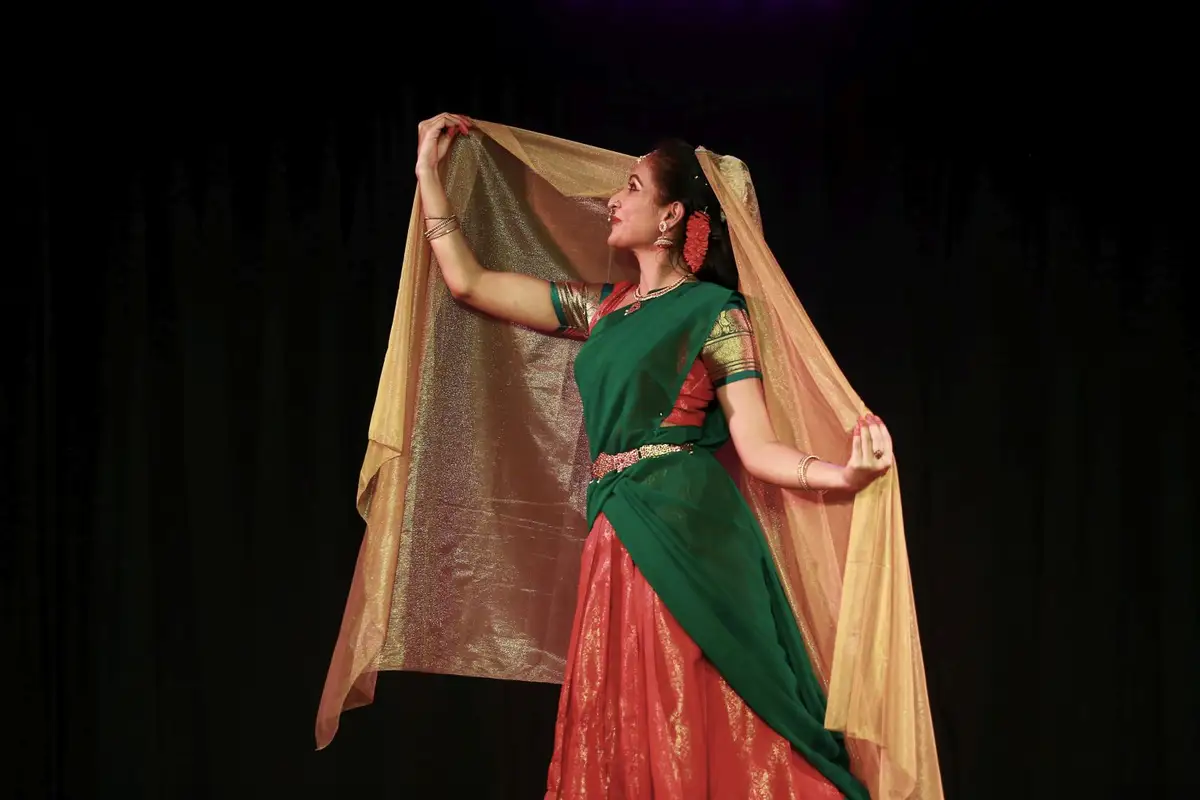
About a third of our adult students have never danced before. Another third learnt as children and stopped for board exams. Both groups do well, for different reasons, and both find the first two months humbling.
The main challenge is araimandi. Adult hips and knees are less forgiving, so we build strength slowly with a fifteen-minute warm-up and allow a higher stance at first. Pain in the knee is a signal to stop, not to push through.
Adults usually learn the theory faster than children. They understand talam, they remember sequences and they ask good questions. Use that: write down each adavu after class and practise it at home for ten minutes.
Within a year, most adult students can perform a pushpanjali and a short keerthanam. Some go on to an arangetram; most simply enjoy having a practice that is theirs, twice a week, away from screens.
Keep reading
From the first conversation to the final bow, what an arangetram takes and what it usually costs in Bengaluru.
How to store ghungroo so the bells stay bright and the cords hold, and how to wash practice sarees so they last.
Discipline and vocabulary, or freedom and floor work: how the two forms differ, and why many adults try both.