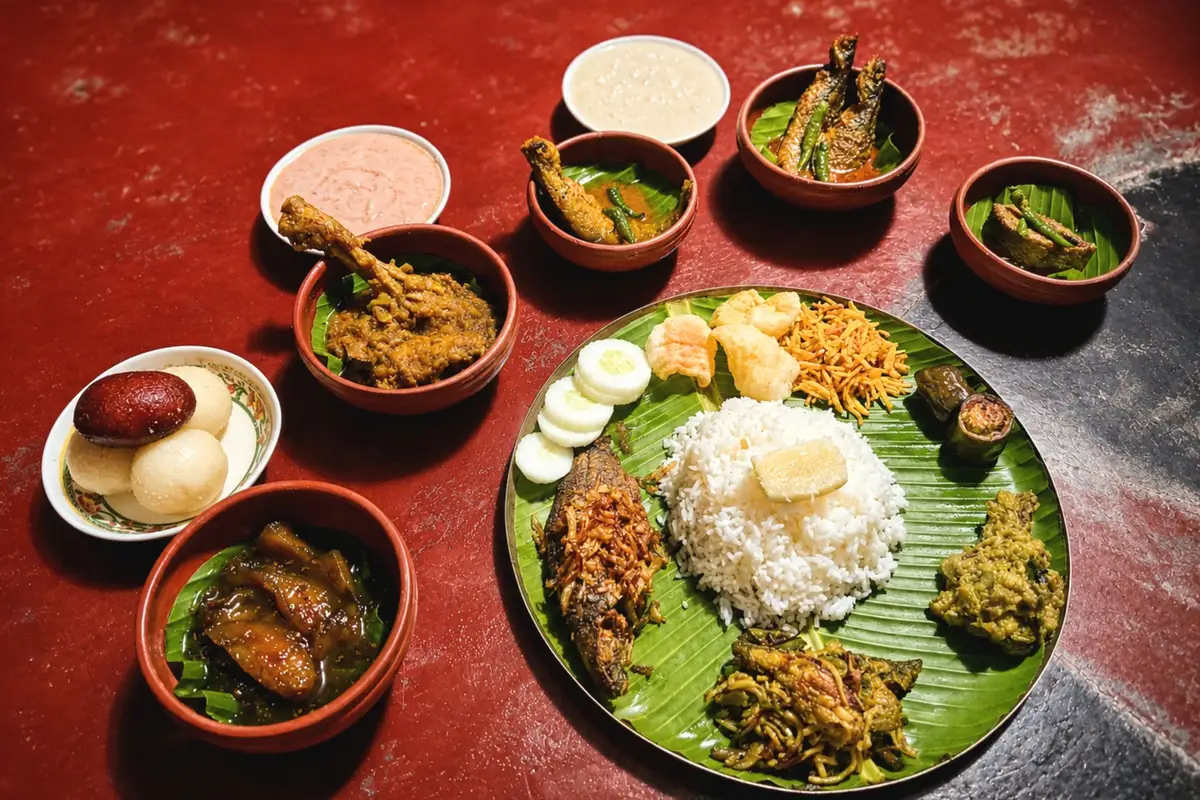
What we cook on board, and why the fish is bought that morning
A day in a houseboat kitchen, from the market at seven to dinner after mooring.
Monsoon rates from June to September · Boarding at our Punnamada jetty from 12 noon
Jetty Road, Punnamada, Alappuzha 688006
Office daily · 8 am – 8 pm · Boarding 12 noon
Jackwood planks, coir rope and no nails: a visit to the yard that repairs our boats.
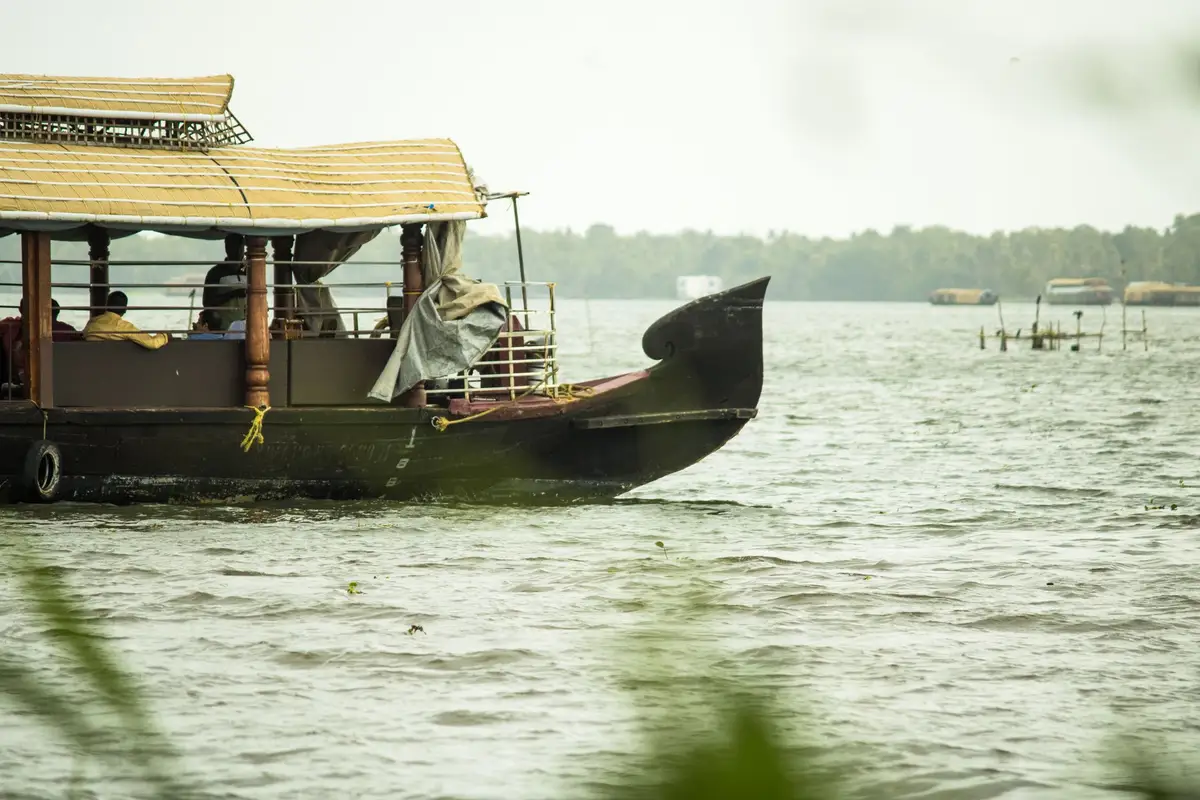
A kettuvallam, the boat our houseboats are built on, was once a rice barge that carried paddy and coconuts across Vembanad to the markets. The word means a boat tied with knots, and that is how the old ones were made: planks of anjili, wild jackwood, stitched together with coir rope and sealed with a paste of cashew-nut shell oil and fish oil. No nails were used.
Our boats are repaired at a yard on the Pallathuruthy side, where Kunjumon and his sons have worked for more than thirty years. A new hull takes about four months. The planks are steamed and bent over a fire, then fitted one by one, and the coir stitching is pulled tight by two men at once.
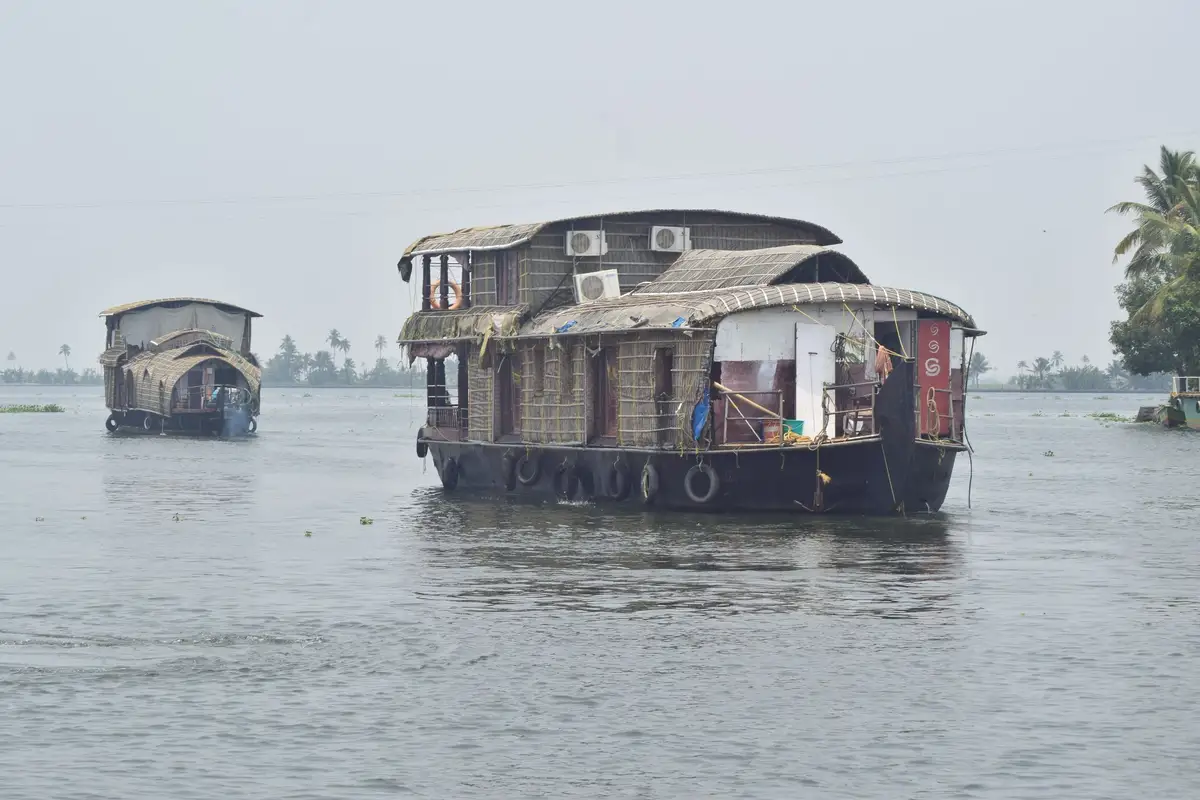
Today the hulls of houseboats are still built in wood, but most have steel frames inside for strength, and the roof of bamboo and woven palm is laid over a wooden frame. Bedrooms, bathrooms and the kitchen are fitted after the hull is in the water.
Every boat comes out of the water every two years for the hull to be checked, re-oiled and re-sealed. That takes three weeks, and it is why some boats are not available in July and August, when we do most of this work.
Keep reading
A day in a houseboat kitchen, from the market at seven to dinner after mooring.
The beach, the canals and a cup of tea in town: how to spend the morning of your cruise.
Life jackets, railings, stairs and the night on the water: the questions families ask most.