Kalari country: a day around Vadakara
Old kalaris, the ballads of Thacholi Othenan and a temple of the martial tradition, an hour north of Kozhikode.
New beginners’ batches start on the 1st of every month · First class free
Kalari Road, near Thali Temple, Chalappuram, Kozhikode 673002
Mon–Sat · 6 – 9 am, 5.30 – 9 pm · Sun 7 – 10 am
How we dig, beat and dry the kalari floor each summer, and why students are asked to help.
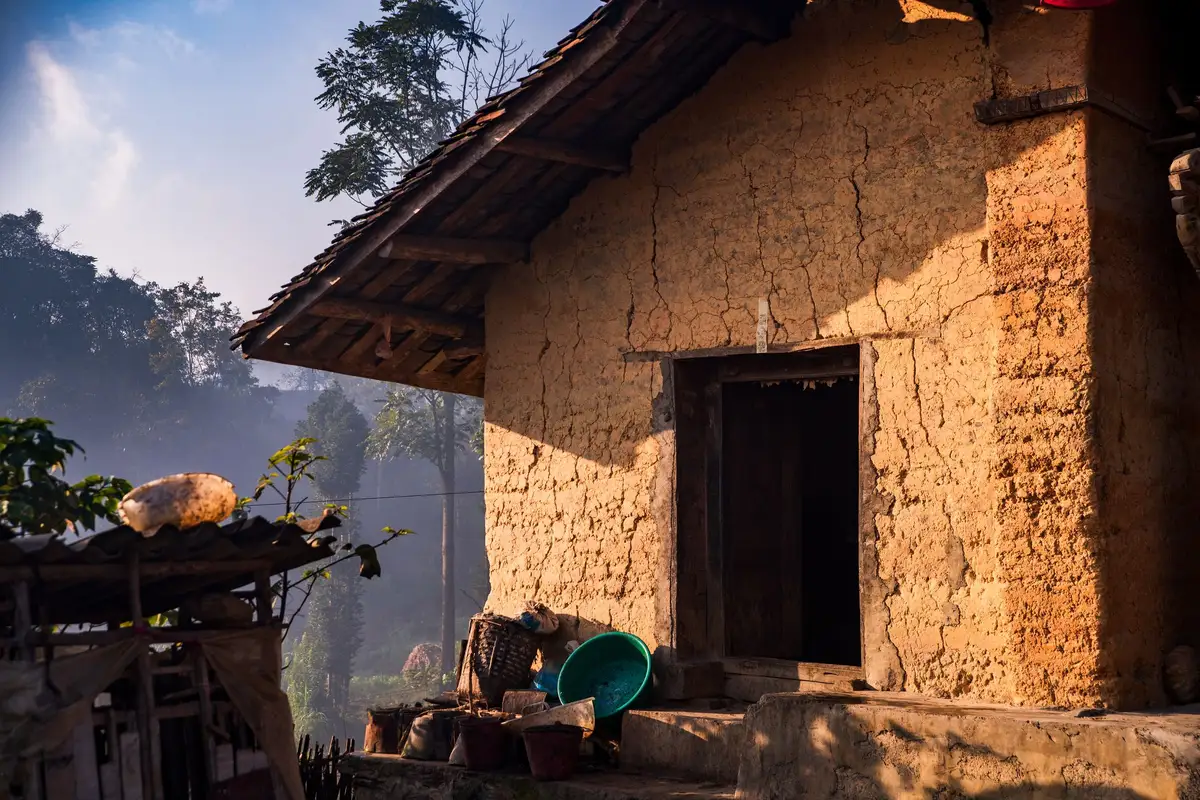
Every April, before the summer rains and after the school year ends, the kalari closes for one week. Visitors sometimes assume it is a holiday. In fact it is the busiest week of the year, because that is when the mud floor is relaid.
A kuzhi kalari floor takes a lot of wear. Months of jumps, rolls and footwork loosen the surface and leave shallow hollows, especially in the corners where students practise kicks. The first job is to scrape off the top few centimetres of loose earth, by hand, with flat iron spades.
Next, new earth arrives. We use red laterite soil from a site near Feroke, sieved twice to remove stones and roots. The soil is mixed with water to a thick paste and spread across the floor in a layer about five centimetres deep. Then comes the beating. Students and teachers work in a line with flat wooden beaters, pounding the floor from one end to the other, again and again over three days, until it is hard and even.
Once it is level, the floor is coated with a thin wash of cow dung and water, the traditional finish, which helps it set and keeps the dust down. It is left to dry for two full days with the doors open. The gurukkal checks the floor barefoot, corner by corner, before he lights the lamp at the poothara and training resumes. Students over fourteen are invited to help with the beating. It is hard work, but many of them say it is the week they remember best.
Keep reading
Old kalaris, the ballads of Thacholi Othenan and a temple of the martial tradition, an hour north of Kozhikode.
Flying kicks, secret pressure points and instant results: what students expect, and what training is really like.
Eight sessions with Anjali, week by week: what is taught, what to wear and how the classes feel.