Iron, clay or copper: which vessel for which dish
A plain guide to matching the metal or the clay to what you cook most, from rasam to dosa to curd rice.
Every iron vessel seasoned before it ships · Free delivery across India above ₹1,999
41 South Masi Street, Madurai 625001
Mon–Sat · 9.30 am – 9 pm · Sun 10 am – 2 pm
What the silver lining in a copper pot is, and when to renew it.
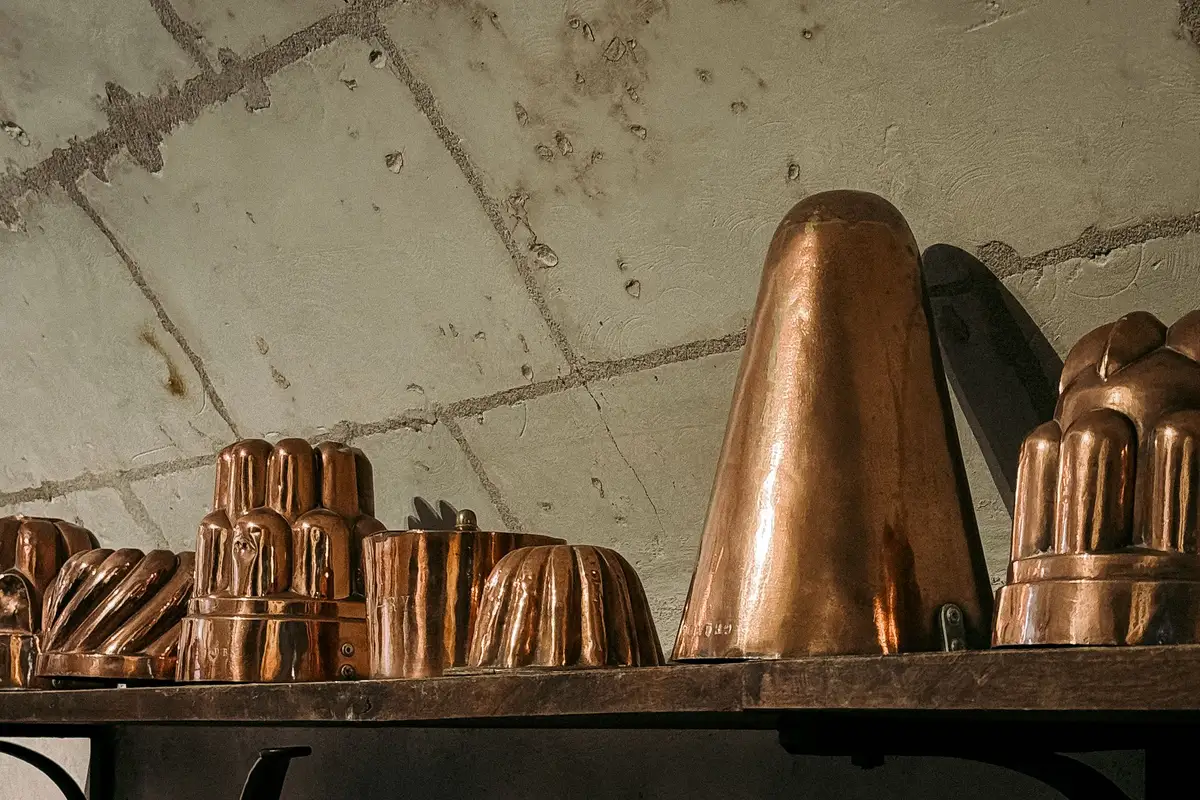
Look inside an old copper pot and you will see a dull silver lining. That is tin, applied by hand by a tinsmith, called a kalaiwala in many parts of India. Copper is one of the best metals for cooking, because it heats quickly and evenly. But bare copper reacts with acidic food like tamarind, tomato and curd, so it must be lined.
Tinning is done over a charcoal fire. The tinsmith heats the cleaned pot, melts a stick of pure tin inside it, and spreads it with a cotton pad and sal ammoniac until the surface is evenly coated. Our tinsmith Selvam has done this for 35 years and can line a pot in about ten minutes.
With daily use, the tin wears thin over three to five years. When you start to see patches of pink copper showing through, it is time to re-tin. Do not wait until most of the lining is gone.
To make the lining last longer, use wooden spoons, avoid heating the pot empty, and do not scrub the inside with steel wool. Clean the outside with tamarind or lemon and salt to bring back the shine.
Keep reading
A plain guide to matching the metal or the clay to what you cook most, from rasam to dosa to curd rice.
Heat, a splash of water, onion on a fork and patience: how to make a new iron tawa release a dosa cleanly.
Tap, soak, fill and wait overnight: the tests every clay pot goes through in our back room.