Your first piercing: lobe, helix or nostril
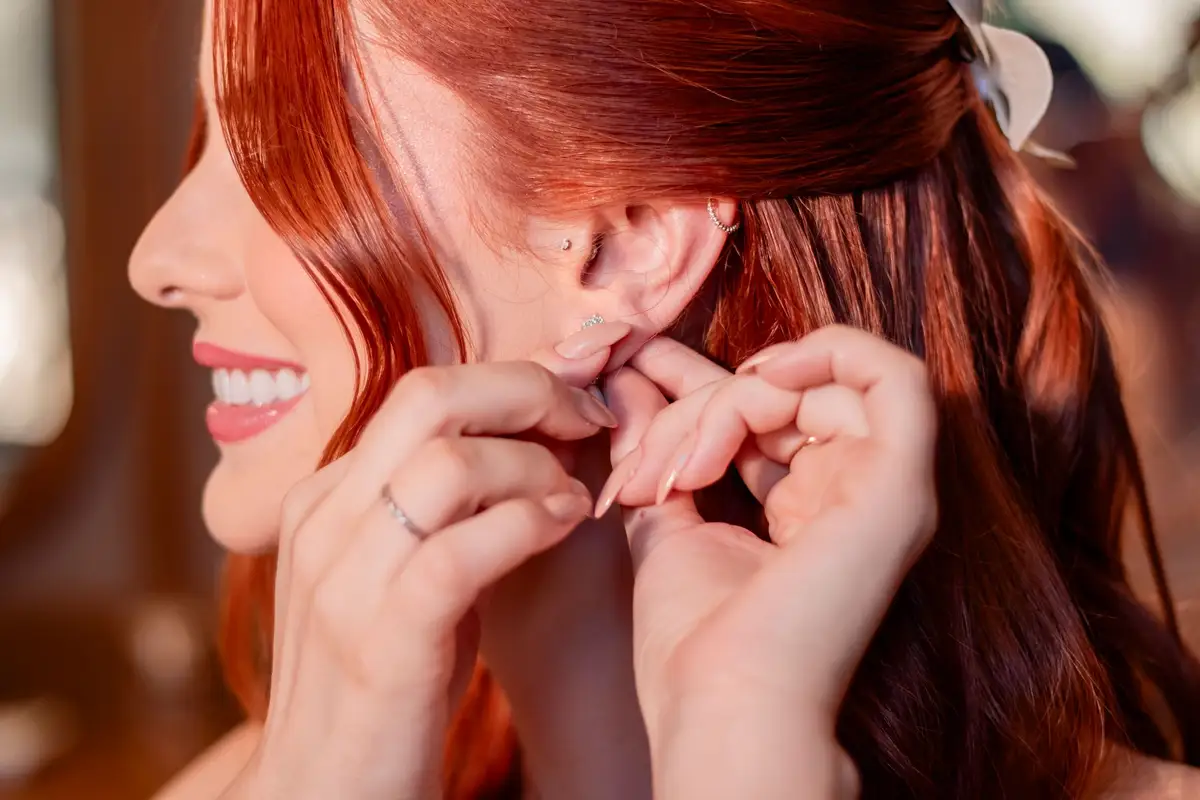
Needle, not gun. What happens in the 20 minutes, which jewellery we use and how to look after it.
Books open for November and December · Consultations on Tuesday and Wednesday evenings
41, 1st floor, 12th Main Road, HAL 2nd Stage, Indiranagar, Bengaluru 560038
Tue–Sun · 12 pm – 9 pm · by appointment
Everyone feels it differently. Which spots are gentler, which are harder, and how to make the day easier.
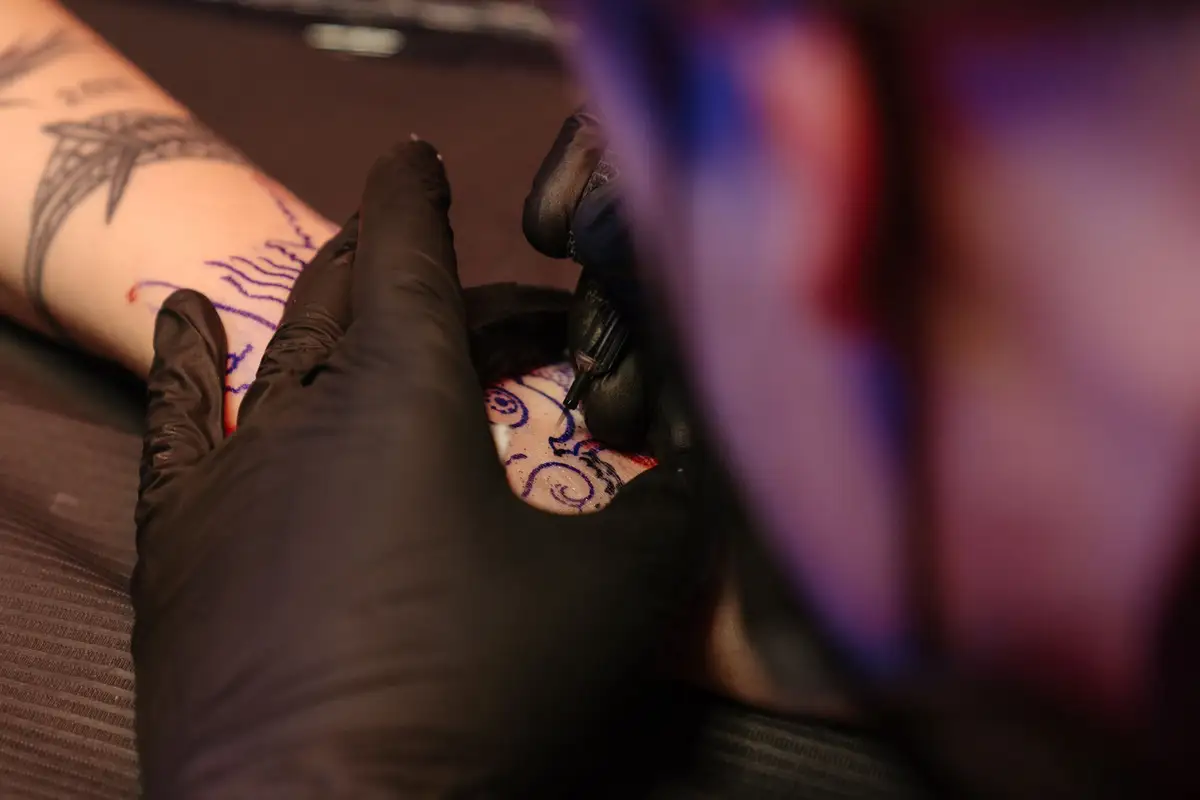
It does hurt, a bit, and anyone who says otherwise is not being straight with you. Most people describe it as a hot scratch, or a sting that becomes background noise after the first ten minutes. How much you feel depends on you, the spot and the length of the session.
Fleshy areas with more padding tend to be gentler: the outer arm, the forearm, the calf and the outer thigh. Areas close to bone or with thin skin tend to be sharper: ribs, ankles, feet, the inner elbow, the spine and the collarbone. Hands and fingers are tender and also fade sooner, which is why we suggest them less.
Some things make the day easier. Sleep well the night before and eat a proper meal an hour or two before your appointment. Bring water and a sweet snack for long sessions. Avoid alcohol the night before. Wear clothes that let us reach the area without you holding them in an awkward position for hours.
During the session, tell your artist if you need a break. We stop for a few minutes every hour anyway on long pieces. Breathe slowly, talk if it helps, or put your headphones on. Most people are surprised at how manageable it is. And if you are very nervous, start with a small piece in a gentler spot. Your second tattoo will feel easier because you know what is coming.
Keep reading
Needle, not gun. What happens in the 20 minutes, which jewellery we use and how to look after it.
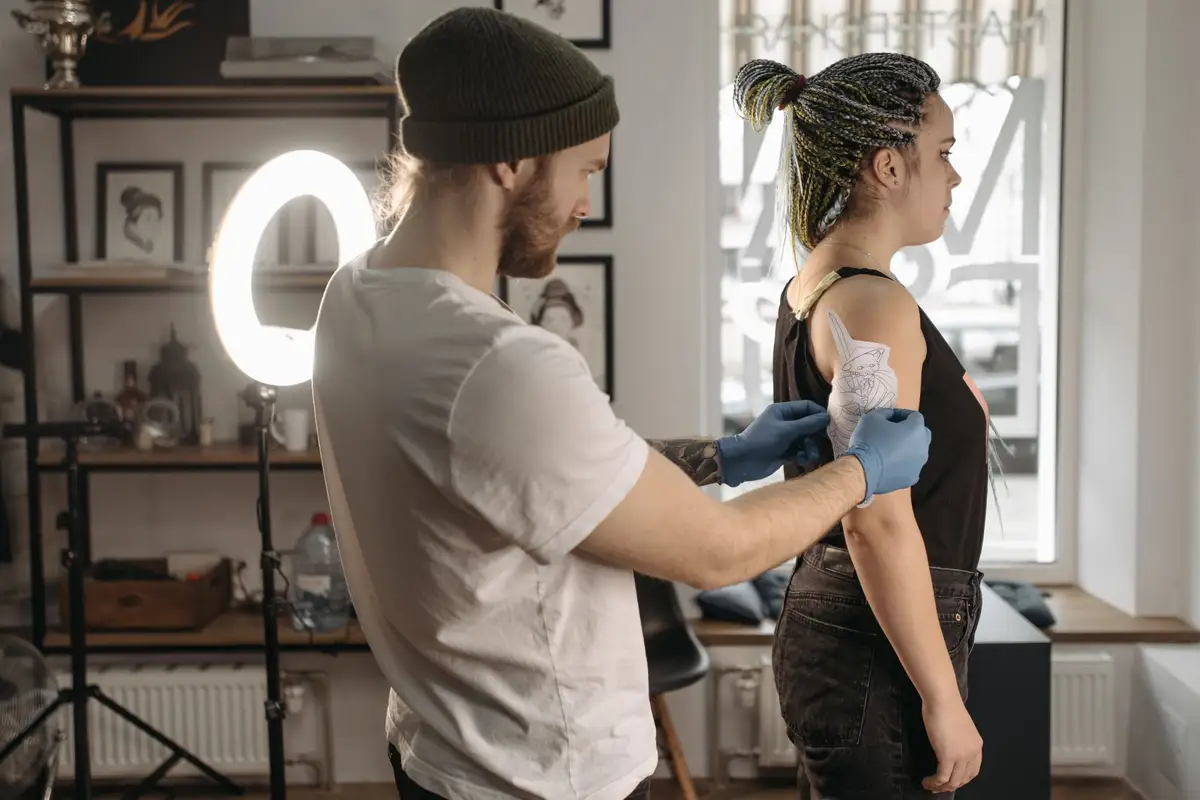
Reference board, pencil, linework, stencil: the steps a design goes through before it touches your skin.
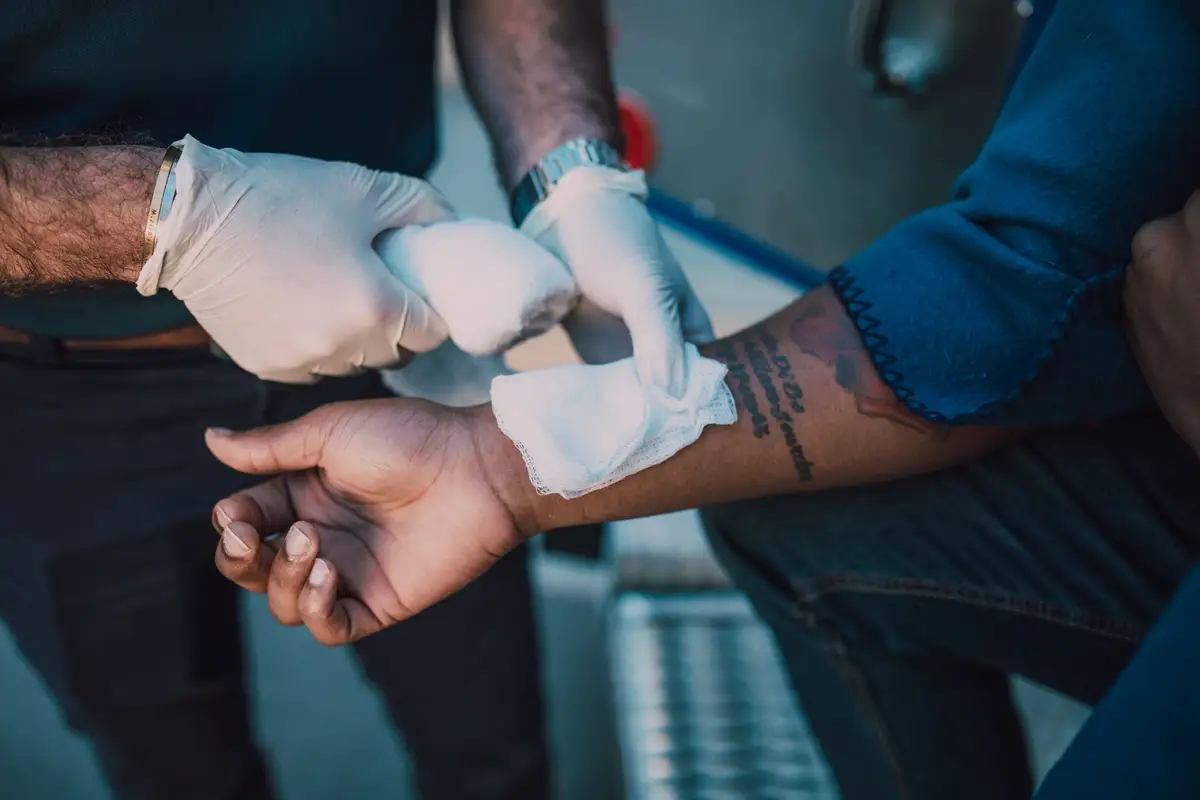
Wash, a thin layer of balm, and hands off. A day-by-day guide to looking after a new tattoo.