Planning fireworks for an Indian wedding
Which moment, which effect, and what to tell the venue first.
November and December wedding dates filling now · Free site visit in Pune and PCMC
Office 7, Sai Chambers, Law College Road, Erandwane, Pune 411004
Mon–Sat · 10 am – 7 pm · Show nights on call
What our crew does from 3 pm to midnight on the day of your show, and what we need from the family.
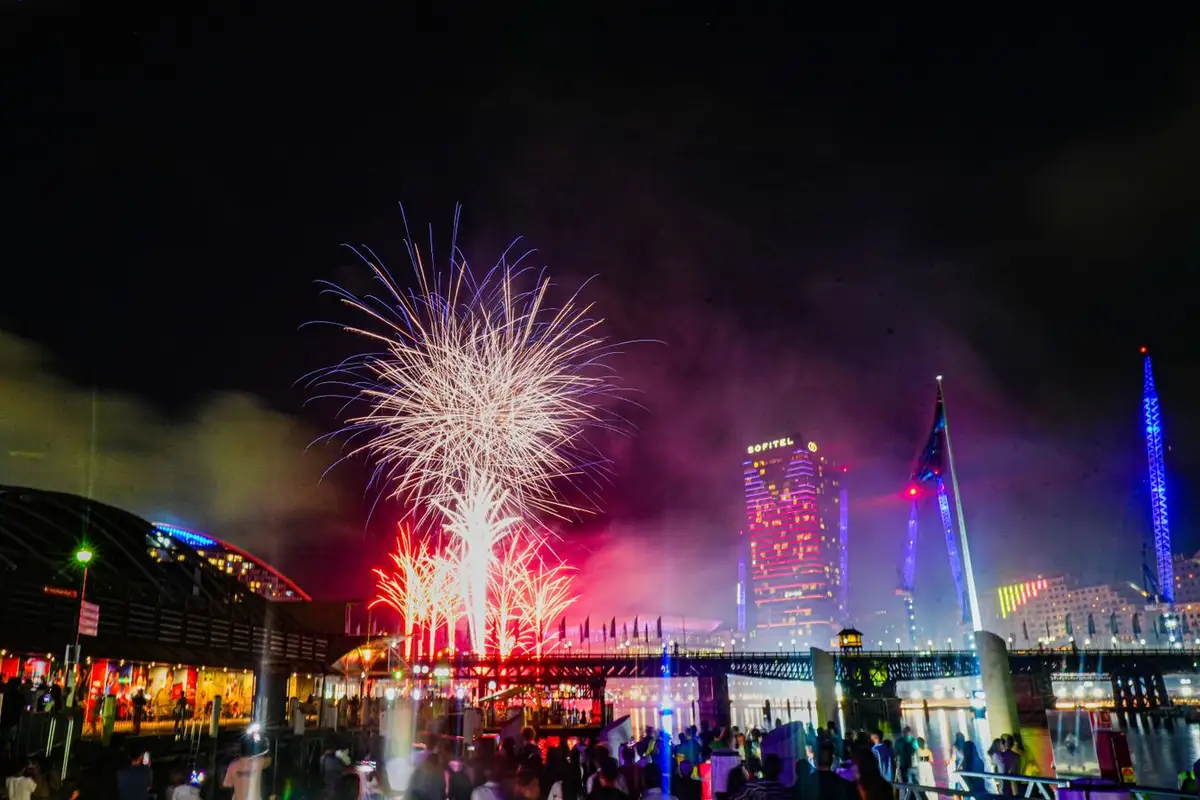
First-time clients often wonder what to expect on the day itself. Here is a typical evening for a baraat entry and a gold willow finale at a Pune lawn.
At 3 pm our van arrives with two to four technicians. We meet the venue manager, confirm the firing point marked on the site visit, and rope off the safety zone. Products stay in closed boxes until they are set out. By 5 pm the fountains for the baraat are in position, the aerials are on their racks, and every igniter has been wired and tested for continuity from the firing board.
Around 6 pm we need ten minutes with one person from the family, usually a cousin or the event planner, who will be our contact for the evening. We agree the cue: often a call from the band leader for the baraat, and a nod from the planner for the finale. Our lead technician carries a radio and stays at the firing board from then on.
The baraat entry fires when the groom’s party reaches the gate, usually five minutes of fountains and aerials. Then we wait, sometimes three hours, for the finale. If wind or drizzle picks up, the lead technician will tell the family and may hold the show for a few minutes. After the last shell, we wait fifteen minutes, then walk the zone with torches, collect debris and pack up. We are usually gone by midnight.
Keep reading
Which moment, which effect, and what to tell the venue first.
Why we walk your ground before we send a quote.
What a cold-spark machine is, and where it can and cannot go.