What it costs to own a plough over five years
Price, diesel, shares and repairs: a five-year cost sheet for a 3-bottom reversible plough on a 25-acre farm.
Rabi season orders open · Dealer enquiries welcome from Punjab, Haryana and Rajasthan
C-118, Phase V, Focal Point, Ludhiana 141010
Mon–Sat · 9 am – 6 pm · test farm Sat 9 am – 1 pm
How each implement works the soil, when to use which, and why many Punjab farms keep both.
Farmers often ask us whether they need a reversible plough at all, or whether a cultivator will do. The answer depends on your soil, your crop rotation and what was left in the field after the last harvest.
A reversible mould board plough turns the soil over completely, burying crop residue, weeds and their seeds 20 to 30 cm down, and bringing fresh soil to the top. Because it can flip at the end of each row, it throws all the soil in one direction, so there are no dead furrows in the middle of the field. It is the right tool after paddy, when stubble and roots need burying, on fields with heavy weed pressure, or once every two or three years to break the hard pan that forms under repeated shallow tillage.
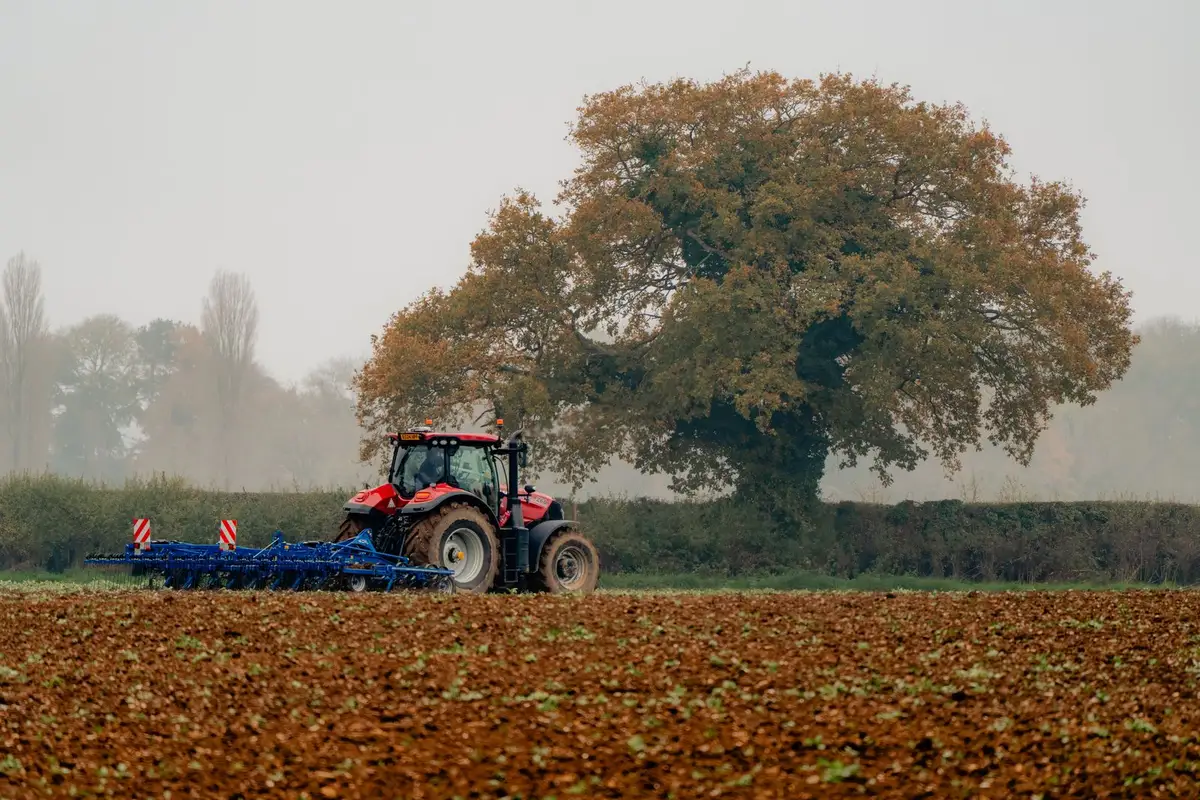
A spring-tine cultivator does not turn the soil. Its tines loosen and break it to about 10 to 15 cm, mix in a little residue and kill young weeds, and they vibrate on their springs, which helps break up clods. It covers ground three to four times faster than a plough and uses much less diesel per acre, so it is the everyday tool for preparing a seedbed after the primary tillage, or on light soils that are already in good condition.
If you can afford only one, choose by your rotation. Farms in a paddy and wheat rotation usually benefit most from a plough once a year and a cultivator for everything else. Ask your dealer for a field demonstration of both on your own land.
Keep reading
Price, diesel, shares and repairs: a five-year cost sheet for a 3-bottom reversible plough on a 25-acre farm.
Laser cutting, bending, robotic welding and paint. How a spring-tine cultivator is built at our Focal Point works.
How to plan a day at the March or September farmers’ fair, compare implements and avoid buying on impulse.