From comb to jar: how we harvest our honey
Uncapping, spinning, straining and a moisture check. What happens between the hive and the label.
New season rubber honey is in · Free shipping across India above ₹999
22/1140 Mavoor Road, Arayidathupalam, Kozhikode 673004
Mon–Sat · 10 am – 7 pm
Veils, smoke and a frame of bees in your hands. How our hive visit works, and what to wear.
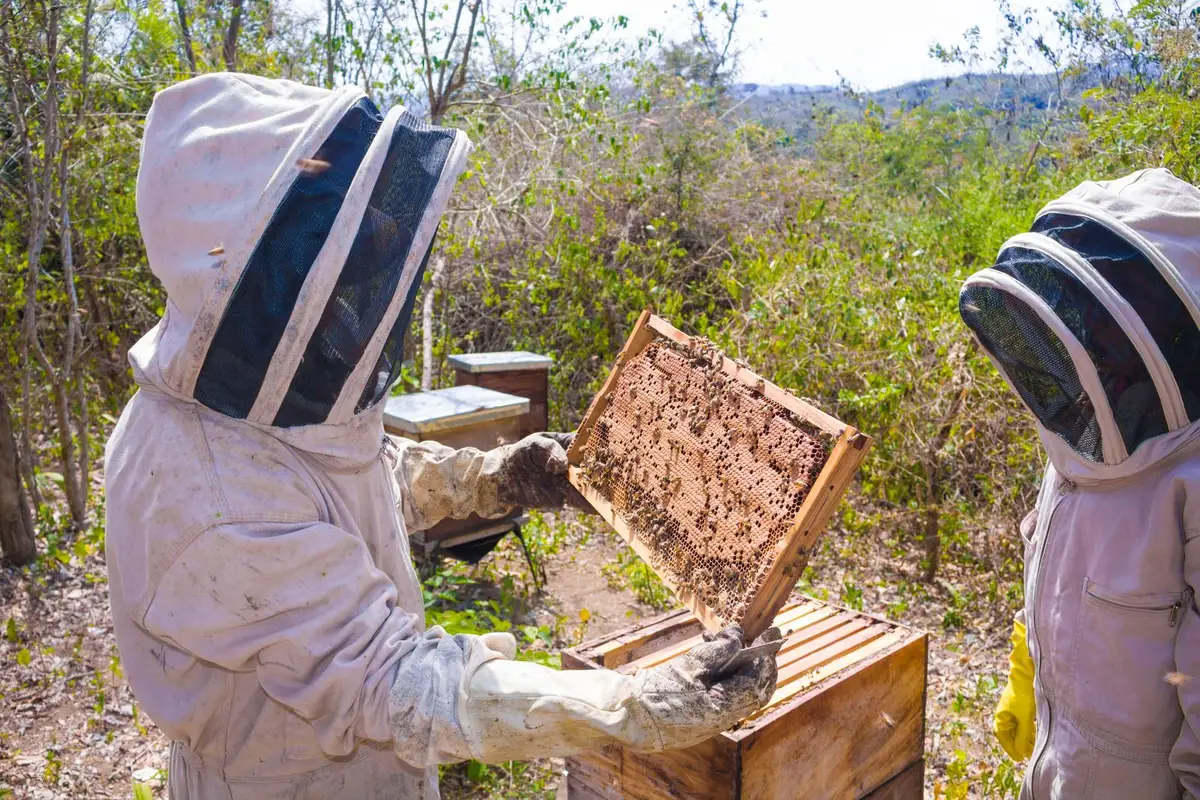
From October to April, every Saturday morning, we take small groups to our hives on the edge of a rubber estate near Kunnamangalam, about 20 km from our shop. If you have booked, or are thinking about it, here is how the morning goes.
We meet at 7 am, when the air is still cool and the bees are calm. Wear long trousers, closed shoes and light-coloured clothes; bees dislike dark colours and strong perfume. We give each person a veil and gloves. Groups are kept to twelve people, and children from age seven can come with a parent. The visit costs ₹850 a person, including the tasting.
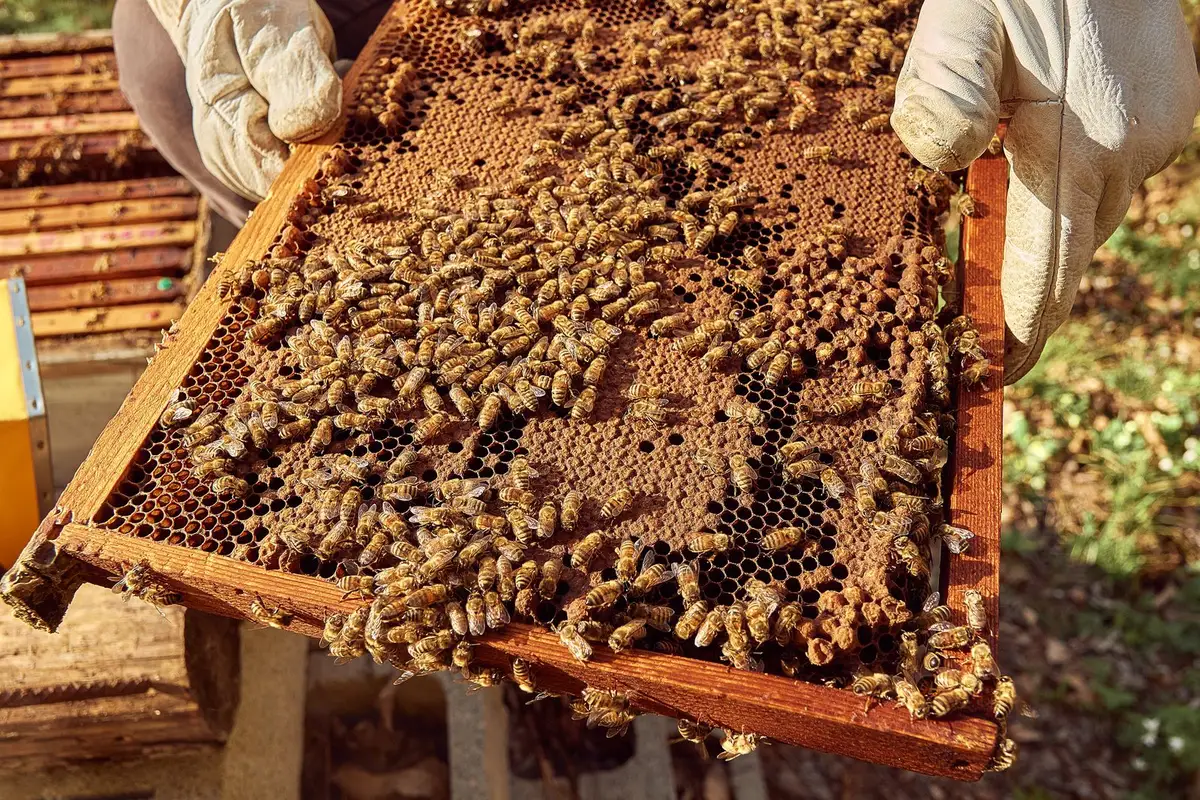
Arun or one of our beekeepers first explains the hive: the queen, the workers and the drones, and how Indian bees differ from the larger European bees kept elsewhere. Then we light the smoker, open a hive and lift out a frame. Everyone who wants to can hold one, covered in bees, and look for the queen. Most people are nervous for the first minute and then forget to be.
The visit ends around 10 am with a tasting under the trees: honey from the comb you just saw, three of our honeys side by side, and a cup of tea. Stings are rare with calm handling, but if you have ever had a strong reaction to an insect sting, please tell us when you book and skip the hive itself.
Keep reading
Uncapping, spinning, straining and a moisture check. What happens between the hive and the label.
Hives, harvests, collectors and glass: where the money goes in a ₹650 jar of forest honey.
A day’s drive from our shop up the ghat to the coffee country, with stops for honey, food and views.