A simple monsoon skin routine
Humid days need fewer, lighter products. Here is what we change between June and September.
Patch-test guide with every order · Free sample with every order
21 Thadagam Road, Coimbatore 641002
Mon–Sat · 10 am – 7 pm
Sixteen herbs, three days of cooking and why the oil is deep red.
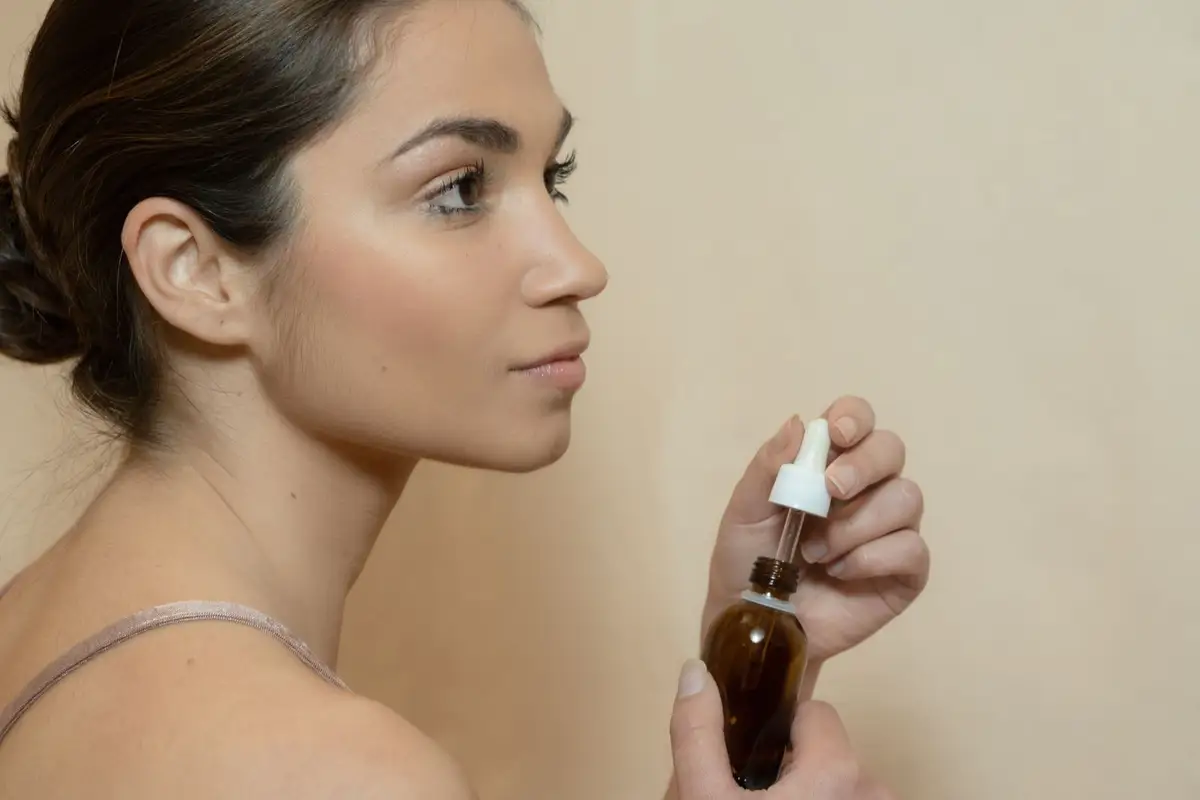
Kumkumadi tailam is one of the most widely known recipes in classical Ayurvedic texts. The name comes from kumkuma, the Sanskrit word for saffron, which is its main ingredient. Our version follows the classical list of herbs closely.
Alongside saffron, the recipe uses sandalwood, vetiver roots, lotus, manjistha, licorice, the barks of several fig trees, and red sandalwood, which gives the oil much of its deep colour. The herbs are first made into a decoction with water, then cooked slowly with sesame oil and goat milk over low heat for three days, until the water has evaporated and the oil has taken up the herbs.
We add a small amount of almond oil to make it lighter on the skin, and nothing else. There is no added fragrance; the scent is saffron and sandalwood. Our saffron comes from a family farm in Pampore in Kashmir, and each batch is tested before we use it.
Use two or three drops at night on clean skin, pressing them in gently rather than rubbing. A little goes a long way. Because the oil contains real saffron, keep the bottle closed tightly and away from sunlight, and use it within six months of opening.
Keep reading
Humid days need fewer, lighter products. Here is what we change between June and September.
Order, names and the words to look for: a short guide to what the back of a bottle is telling you.
Why the same herb feels different in an oil, a gel and a cream, and how to choose by skin type and season.