Your first visit to our counter: what to expect
How tasting works, why we test on your wrist and not on paper alone, and how to leave with the right attar.
Distilled in Kannauj, blended in Lucknow · Free sample vial with every order
7 Phool Wali Gali, Chowk, Lucknow 226003
Daily · 11 am – 9 pm · Fri 3 pm – 9 pm
Attar is often seen as something worn by grandfathers on Fridays. Our customers, and their reasons for wearing it, say otherwise.
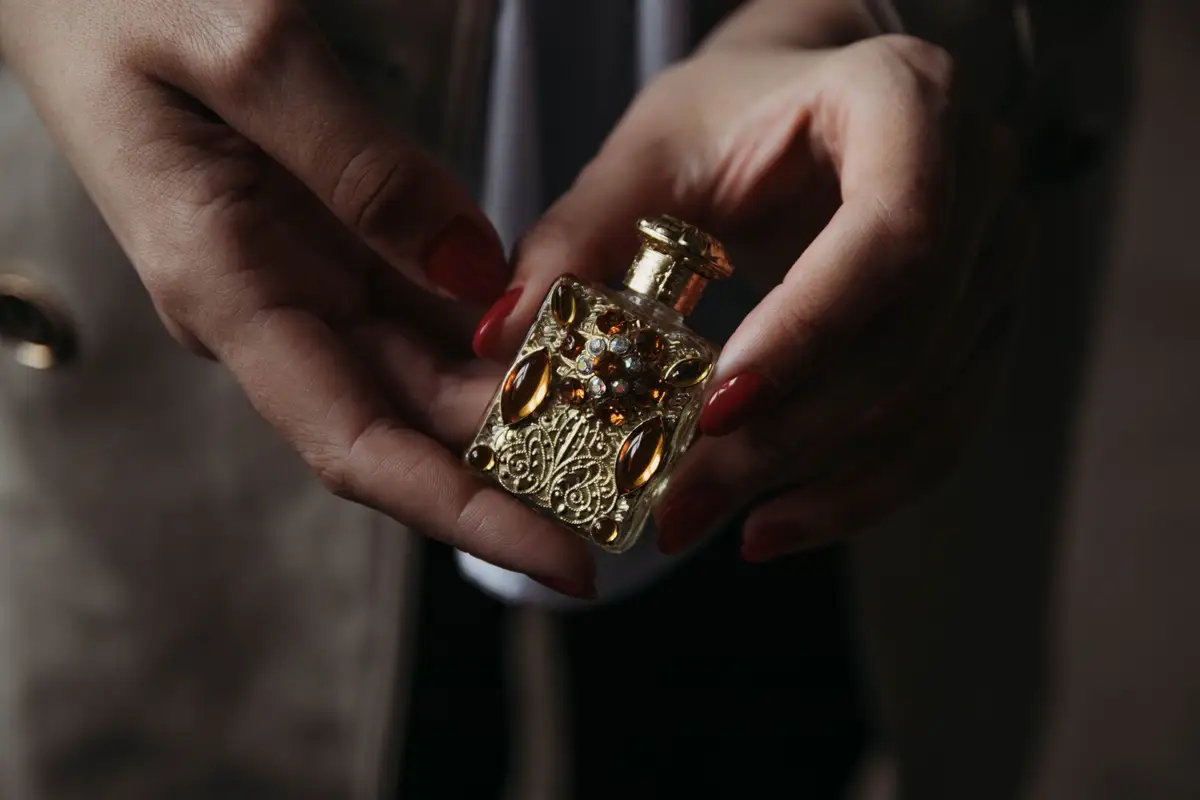
A young woman visiting our counter last winter told us she had always thought attar was “something my nana wore to Friday namaz”. It is a common view, and only half true.
Attar does have a long place in Islamic tradition, because it is free of alcohol and has been worn for prayer for centuries. But it was never only religious. Mughal and Awadhi courts wore it every day, Hindu temples in Kannauj still use rose and kewda, and brides across North India have long worn mogra and hina on their wedding day.
Today more than half of our customers are under 35, and close to half are women. Many come to attar because it is alcohol-free and gentle on the skin, or because a spray perfume gives them a headache in a closed office. Others like that it sits close to the body. Someone has to stand near you to notice it, which suits a lift or a meeting room.
There are no rules about who should wear which attar either. Rose is not only for women, and oud is not only for men. Mitti is popular with students for its calm, rainy smell, and amber and saffron is a favourite with couples who share one bottle. Come and try a few on the sample card, and choose with your nose, not with the label.
Keep reading
How tasting works, why we test on your wrist and not on paper alone, and how to leave with the right attar.
Each attar from Kannauj is checked by nose, by eye and on cotton before we pour it. A look at our tasting bench.
Why attar is sold by weight, why prices vary so much between attars, and which size suits a first purchase.