Choosing an attar for the season
Cool attars for summer, warm ones for winter: the old Lucknow rule, and why it still works.
Distilled in Kannauj, blended in Lucknow · Free sample vial with every order
7 Phool Wali Gali, Chowk, Lucknow 226003
Daily · 11 am – 9 pm · Fri 3 pm – 9 pm
Copper degs, bamboo pipes and a sandalwood base: the slow method that has not changed in centuries.
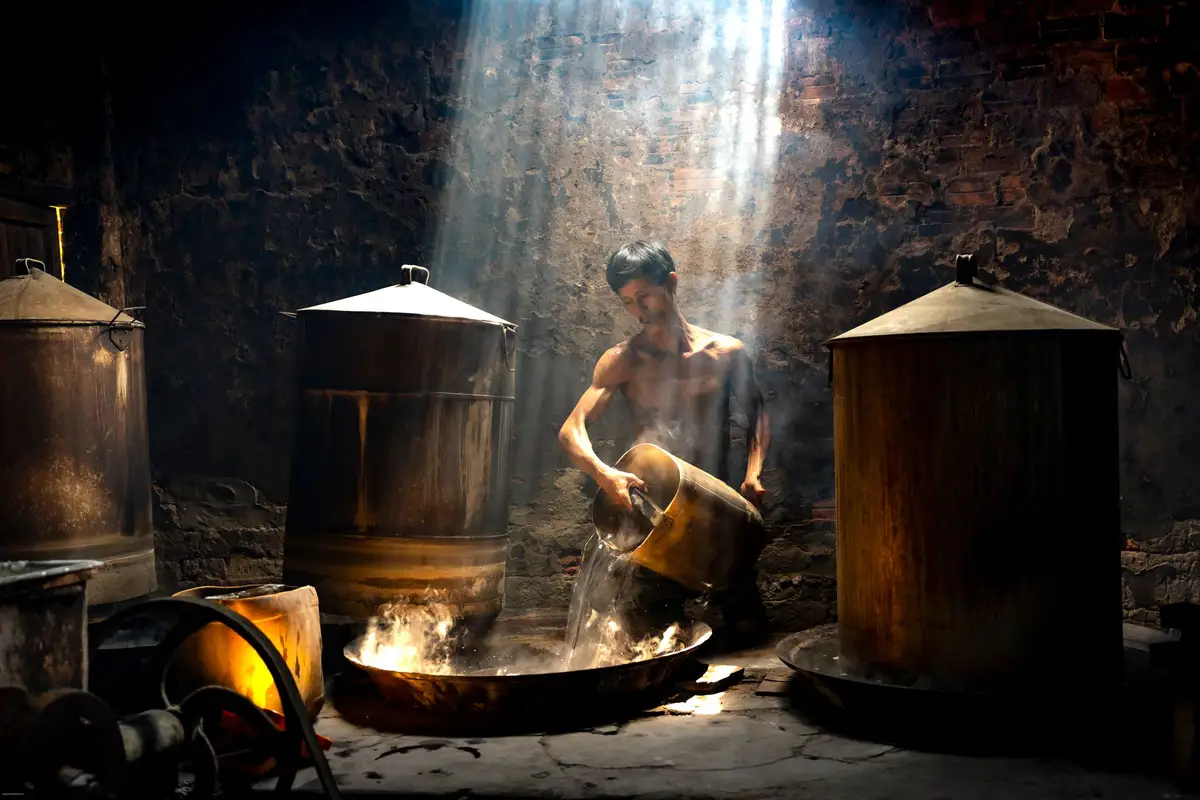
Kannauj, a small town on the Ganga about 80 km from Lucknow, has distilled attar for more than four hundred years. The method, called deg-bhapka, is almost unchanged.
Fresh flowers, often rose or jasmine picked before sunrise, are loaded into a large copper still called a deg, covered with water and sealed with clay. A wood or cow-dung fire heats the deg slowly. The fragrant steam travels through a bamboo pipe into a copper receiver, the bhapka, which sits in a tank of cool water and holds sandalwood oil.
The steam condenses into the oil, which absorbs the scent. The distiller judges the temperature by touch and the progress by smell. The process is repeated with fresh flowers, sometimes for weeks, until the oil is saturated.
The attar is then poured into leather bottles called kuppis, which let the remaining water escape, and left to age. Ruh gulab is aged for at least a year before it reaches our shelves.
Keep reading
Cool attars for summer, warm ones for winter: the old Lucknow rule, and why it still works.
Where to apply it, how much to use and how to store it.
What Lucknow wears to iftar, to Eid namaz and to the visits that follow, and how to choose attar as a gift.