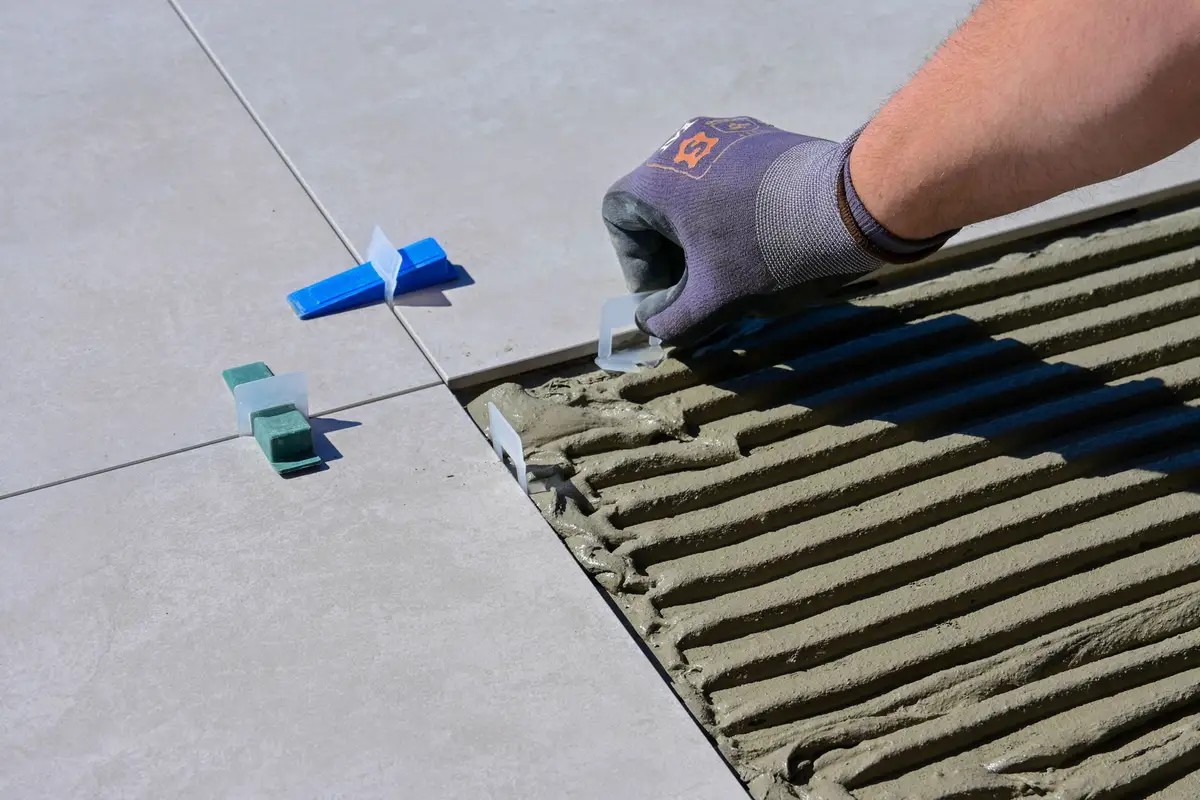
Timing a tiling project around a Jaipur summer and monsoon
Heat, dust and rain all affect how tiles are laid and how well they set. When to start, what to avoid and how to plan.
Trade prices for architects and contractors · Samples delivered free within Jaipur
B-14, Sardar Patel Marg, C-Scheme, Jaipur 302001
Mon–Sat · 10 am – 7.30 pm
No printing, no kiln. A visit to the workshop where our cement tiles are made, and why each one takes nearly a month.
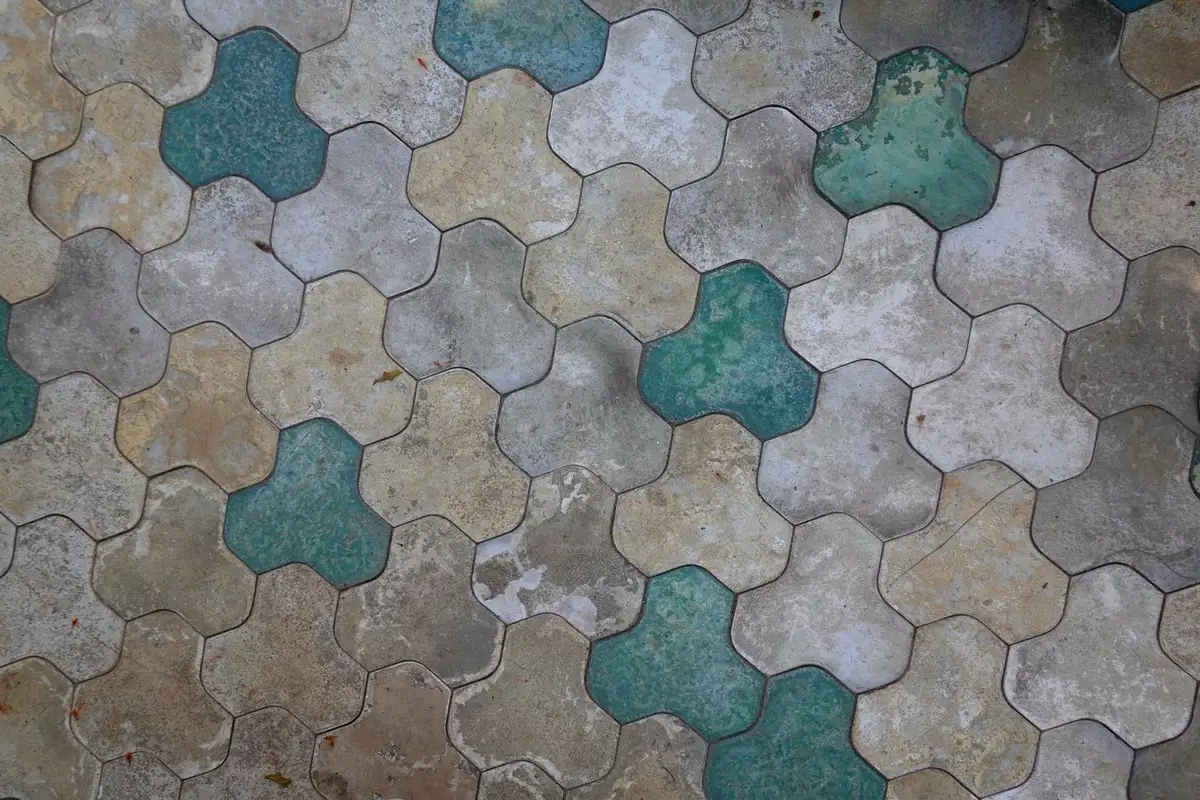
Our handmade cement tiles come from a family workshop on the edge of Jaipur, where Shabbir and his brothers have made them for over 30 years. Each tile passes through their hands one at a time. Here is how.
It starts with a brass mould: a square frame with a thin brass divider inside, shaped like the pattern. Each colour of the design has its own section. The maker places the divider in a steel frame and pours coloured cement, a mix of white cement, fine marble powder and mineral pigment, into each section with a small cup. The colour layer is only about 4 mm thick, but it is the face of the tile.
The divider is lifted out carefully, and a dry mix of grey cement and sand is spread on top to soak up water from the colour layer. A second, coarser layer follows. Then the whole tile goes into a hydraulic press at about 120 tonnes, which binds the layers into a solid 16 mm tile. A good maker presses about 300 tiles a day.
The tiles are soaked in water for a day, then stacked to cure slowly in the shade for at least 21 days. They are never fired in a kiln. Before dispatch, we seal each batch at our showroom. Small differences in colour and edge from one tile to the next are part of the handmade character, and they disappear once the floor is laid.
Keep reading
Heat, dust and rain all affect how tiles are laid and how well they set. When to start, what to avoid and how to plan.
Some of the city’s best floors are in its palaces, museums and old havelis. A half-day route for anyone planning a floor of their own.
Many families avoid shiny floors for fear of falls, especially with elderly parents. What really makes a tile slippery, and what to choose.